Why Folding Chairs Fade and Crack in the Sun (and Which Last Longest)
Most people blame rain for wrecking outdoor folding chairs. The bigger culprit is the sun.
Ultraviolet light, the band from about 290 to 400 nanometers, carries enough energy to break the chemical bonds in plastic, fabric, and wood. That is why a chair left in full sun goes chalky, fades, and turns brittle long before it ever rusts.
The damage is predictable, though, and some materials resist it far better than others.
The chair you buy and where you keep it decide how long it survives.
Most folding chair damage is sun damage, so shade and storage matter more than you would think.
What sunlight actually does to a chair
UV light starts a process called photo-oxidation.
In plastic, it snaps the long polymer chains into shorter ones, a reaction known as chain scission. The surface chalks, cracks, and grows brittle as it loses strength.
You see it before you feel it.
- Color fades and dulls first.
- A fine white powder, called chalking, appears on the surface.
- The plastic stiffens, then cracks under normal weight.
That last stage is the dangerous one. A chair that has gone brittle can fail under a person even though it looks fine from across the yard.
Wood and fabric take the same energy by a different route, but the result is the same. The material weakens from the outside in.
Fading is the warning sign. Brittleness is the failure.
How each material ages in the sun
Every folding chair material has its own way of giving up.
- Plastic and resin: they chalk, fade, and crack from photo-oxidation. Cheap unstabilized plastic can go brittle in a season or two of full sun.
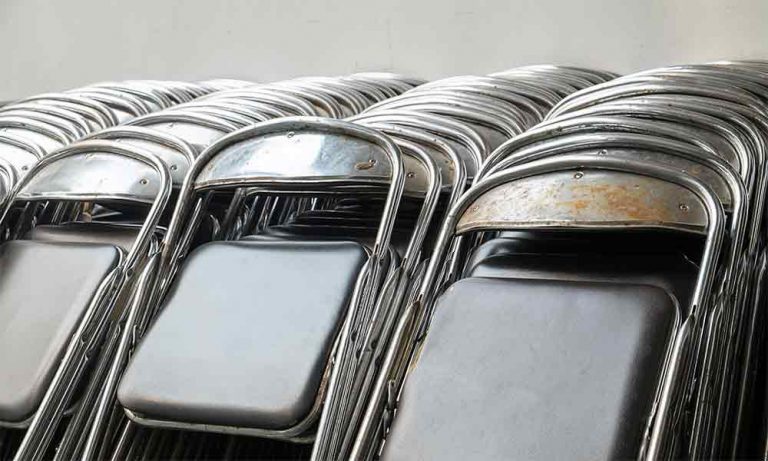
- Metal: the steel or aluminum frame does not photo-degrade, but the paint or powder coat fades and chalks, and once that coating fails the metal underneath starts to rust.
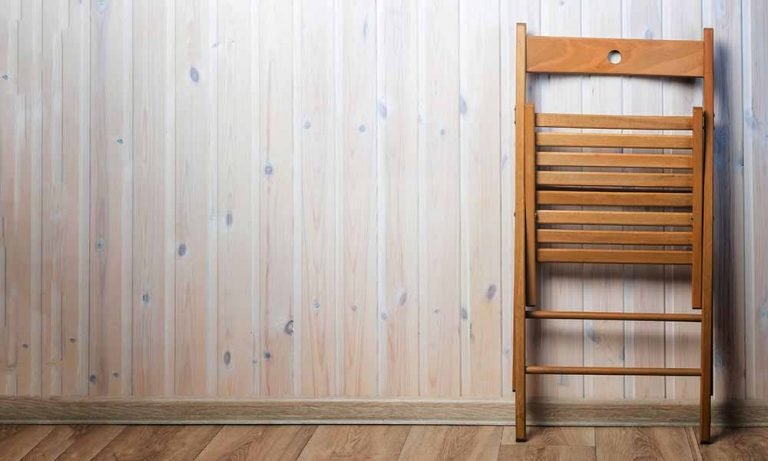
- Wood: UV breaks down lignin, the natural glue that binds wood fibers, so the surface turns gray, rough, and weak as rain washes the broken-down lignin away.
- Fabric and mesh: sling seats fade and the fibers lose strength, eventually tearing where the sun hits hardest.
The material you choose sets how fast all of this happens.
Sun finds the weak point in every material, just by a different route.
Why some plastics survive and others crumble
Two plastic chairs can look identical and age completely differently. The difference is additives you cannot see.
Outdoor-rated plastic is mixed with UV stabilizers, and the two common types do different jobs.
- HALS, or hindered amine light stabilizers, scavenge the free radicals that UV creates, interrupting the damage before it spreads.
- Carbon black absorbs UV outright, which is why black and dark chairs usually last longest in full sun, even though it limits the color options.
Color-through resin helps as well, since a scratch does not expose a paler, unprotected layer underneath.
Fabric follows the same logic. Solution-dyed slings, where the color is locked into the fiber instead of printed on top, hold their color and strength far longer than cheap surface-dyed cloth.
A chair sold as outdoor or UV-stabilized is built to resist the sun. A cheap indoor-grade chair is not.
How to slow the damage
You cannot stop UV, but you can starve it.
- Store chairs out of constant sun. A shed, garage, or covered storage buys years of life.
- Use a breathable cover for chairs left outside between uses.
- Choose UV-stabilized resin or coated metal for any chair that lives in full sun.
- Keep a UV-blocking finish on wooden chairs, and refresh it before it wears through.
- Rotate your chairs so the same few are not always in the harshest spot.
Cleaning also helps you catch trouble early. When white plastic starts to gray or chalk, that is UV at work, not just dirt.
Shade is the cheapest UV protection there is.
The bottom line
Sun, not rain, is what ages most folding chairs, and it does it through the same photo-oxidation in every material.
For chairs that live outdoors, buy UV-stabilized resin or coated metal, lean toward darker colors in full sun, and keep any wood finished.
For everything else, the fix is shade.
A chair stored out of the sun and under a cover can outlast an identical one left exposed by years. To compare models built for the outdoors, start at the folding chair buyer’s hub.