How to Clean White Plastic Chairs
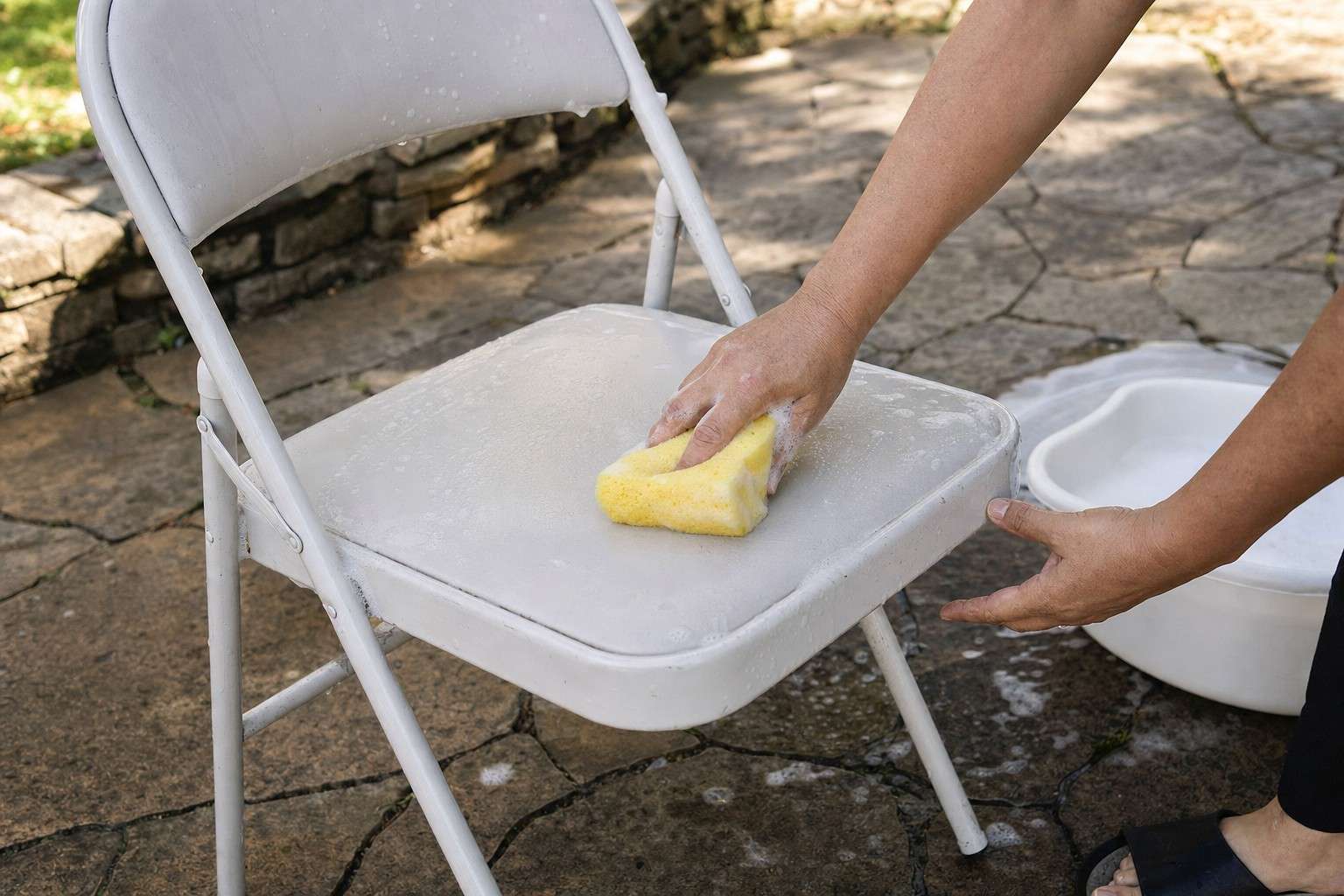
Warm water, dish soap, and a soft brush handle most of what lands on white plastic chairs. Mix a few drops of dish soap into a bucket of warm water, scrub with a soft-bristle brush or sponge, and rinse. That covers routine grime for most people.
Reader-supported: if you buy through links on this page we may earn a small commission, at no extra cost to you.
For yellowing, mildew, or chairs that have sat outside for years, you need a bit more. The full method is below, from the gentlest fix to the strongest.
Why White Plastic Chairs Turn Gray or Yellow
White plastic starts clean and shows everything.
The main culprits are sun exposure, mildew, and oxidation. UV light breaks down the surface of polypropylene, the plastic most folding chairs are made from, and it slowly turns chalky or yellow. Moisture trapped on the surface feeds mildew, which shows up as gray or black patches. Airborne dust and pollen settle into the microscopic texture of the plastic and darken it over time.
Constant sun is the deeper version of this, the sun damage that also leaves old plastic chairs brittle.
The discoloration is not permanent. Most of it lifts with the right cleaner and some scrubbing.
The Basic Wash (Start Here)
This handles everyday dirt and light grime.
What you need: warm water, a few drops of dish soap, a soft-bristle brush or a non-scratch sponge.
Mix a small amount of dish soap into a bucket of warm water. Scrub the chair surface, paying attention to the seat, backrest, and any grooves or ridges where dirt collects. Rinse with clean water and let the chair air dry or wipe it down.
Do this first, before reaching for anything stronger. Many chairs that look badly stained come clean with just soap and water.
Stubborn Discoloration: What to Reach For
If the basic wash leaves yellow or gray areas, work through these options in order.
Baking Soda Paste
Baking soda is a mild abrasive that lifts discoloration without scratching plastic.
Mix baking soda with just enough water to make a paste. Apply it to the discolored areas, let it sit for 10 to 15 minutes, then scrub gently and rinse. This works well on yellowing from sun exposure and on surface oxidation.
A baking soda paste is the safest starting point for stained plastic.
Diluted White Vinegar
White vinegar cuts through mineral deposits and light grime.
Mix one part white vinegar with three parts water. Apply with a sponge or spray bottle, scrub, and rinse. It is useful if you have hard-water spots or a slight chalky film.
The vinegar smell disappears once the chair dries.
Diluted Bleach Solution (Mildew and Mold Only)
Use a diluted bleach solution only when there is actual mildew or mold, not just yellowing.
Mix about one tablespoon of household bleach into a quart of water. Work outside or somewhere with good ventilation. Apply with a sponge, let it sit for 5 minutes, then rinse thoroughly. Wear gloves. Do not let bleach dry on the plastic without rinsing.
Bleach handles mold and mildew well. It does not fix sun-yellowing, and overuse degrades plastic over time. Save it for the cases where you actually see mold.
What Not to Do
A few common mistakes make plastic harder to clean, not easier.
Do not use abrasive scrubbing pads or scouring powders. They scratch the surface of the plastic, and scratched plastic holds dirt more stubbornly than smooth plastic does. You end up with chairs that look worse after each cleaning cycle.
Do not use undiluted bleach. The concentration is too high for plastic and can cause surface damage.
Do not mix bleach and vinegar in the same cleaning pass. Rinse one fully before applying the other.
Prevention: Keep Them Cleaner Longer
The chairs that stay white longest are the ones stored out of constant sun.
UV exposure is the biggest driver of yellowing in polypropylene. Many folding chairs, including the resin and polypropylene types covered in the materials guide, are designed to live outside. But permanent direct sun accelerates the breakdown faster than occasional outdoor use does.
A few habits help:
- Rinse the chairs with water after heavy outdoor use, especially if they sat on grass or near food.
- Dry them before stacking. Stacking wet chairs traps moisture between surfaces and promotes mildew.
- Store them indoors or under a cover when they are not in use for an extended period.
Most of the gray and yellow that accumulates comes from storage, not use.
If Your Chairs Have Mesh or Fabric Seating
The methods above are for plastic surfaces. If your chair has a mesh seat or fabric back, the cleaning approach is different. The mesh chair cleaning guide covers that material specifically.
Quick Reference
Start with the gentlest method that fits the problem, and escalate only if it does not work.
| Problem | Method |
|---|---|
| Everyday dirt and grime | Dish soap and warm water |
| Yellowing from sun or oxidation | Baking soda paste |
| Hard-water spots or chalky film | Diluted white vinegar |
| Actual mildew or mold | Diluted bleach solution, rinsed thoroughly |
| Scratches that hold more dirt | Prevent by skipping abrasive pads |
The best folding chairs for outdoor use are rated for weather exposure, but even weather-rated plastic benefits from occasional cleaning and shade when stored.