The Best Way to Store Folding Chairs
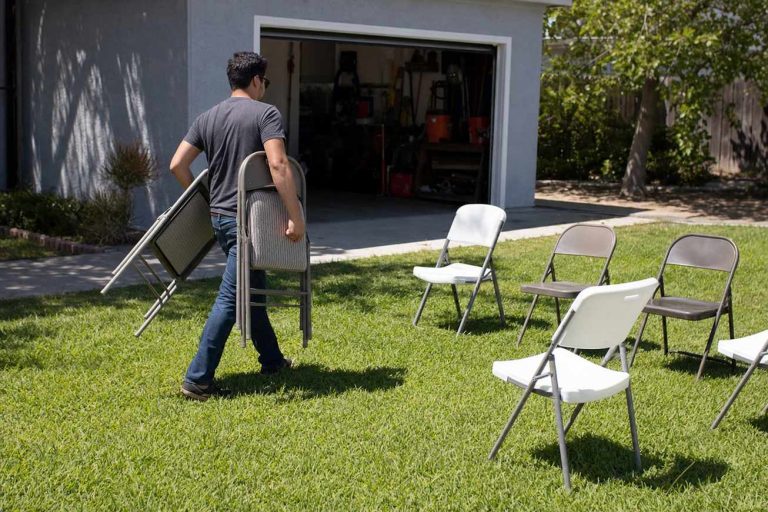
Store folding chairs flat or hung, off a damp floor, in a dry location. If you have several, a wall rack or chair cart keeps them organized and protects them from the main culprits: rust, mildew, and warped frames.
Reader-supported: if you buy through links on this page we may earn a small commission, at no extra cost to you.
Most chair damage happens in storage, not during use.
Storage is also a hidden cost of owning chairs rather than renting.
A metal chair left on a concrete garage floor will rust along the legs. A padded chair stacked in a damp basement will grow mildew in the fabric. A wooden chair stored in a hot attic risks warping and cracking the finish. The chairs survive the party. What damages them is how you put them away afterward.
Here is how to store folding chairs well, by situation and by material.
Wall hooks and racks: the best use of vertical space
If you have a wall in a garage, utility room, or closet, hooks are the most efficient storage for folding chairs.
Each chair hangs flat against the wall, taking up almost no floor space. You can fit four or six chairs in the footprint of one chair lying on the floor. The chairs stay dry, stay accessible, and stay off concrete.
A dedicated folding chair wall rack holds chairs more securely than generic utility hooks.


Look for racks with rubber-coated or foam-padded hooks. They protect the chair frame from scratching and stop the chair from sliding off. A small rack rated to hold 200 pounds handles a stack of six standard metal chairs with room to spare.
For mounting and spacing details, the guide to how to hang folding chairs on a wall covers the specifics.
Chair carts and dollies: the right tool for many chairs
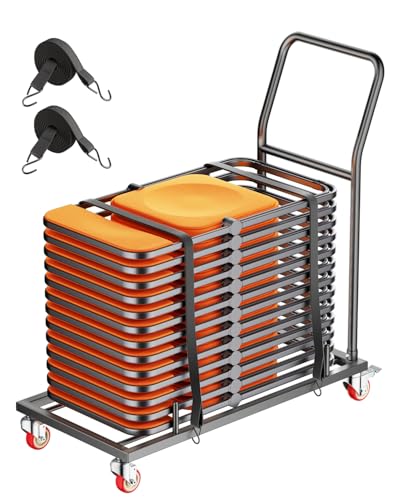
If you are storing 20 or more chairs, a chair cart is worth the investment.
A cart lets you move a full stack across a room without carrying chairs one at a time. It keeps the stack stable and upright, so chairs are not leaning against a wall or sliding off each other.
Most chair carts are designed for a specific chair type, so match the cart to what you own.
Standard banquet-style metal folding chairs stack differently than resin or padded chairs. Buy a cart made for your chair’s profile and the stack sits flat and secure.
Keep chairs off concrete and damp floors
This is the single most important storage rule.
Concrete floors hold moisture. A metal chair on bare concrete will show rust at the leg tips within a season. That is worst in a garage or basement, where temperature swings are wide. The rust starts at the bottom where water wicks up, and it spreads from there.
If chairs must go on concrete, put them on a pallet, a rubber mat, or a piece of plywood.
Even a few inches of clearance makes a real difference. The air circulates, the metal does not sit in contact with moisture, and the legs stay clean.
Covers for stored chairs
A cloth or vinyl cover keeps dust and moisture off chairs during long storage.
This matters most for:
- Padded chairs, where dust settles into fabric and moisture feeds mildew
- Wooden chairs, which benefit from a barrier against humidity fluctuations
- Plastic chairs stored for a season outdoors or in an uninsulated space
For a small number of chairs, individual storage bags work fine. For a large stack, a single furniture cover draped over the whole stack is quicker.
Stacking limits
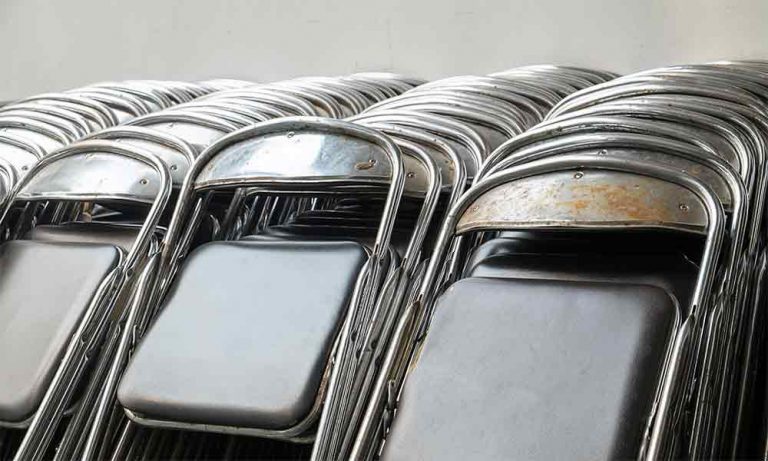
Most standard metal and plastic folding chairs are designed to stack, and a stack of 10 to 15 is common in event settings.
Beyond that, the bottom chairs bear a lot of weight. The legs can bend outward, the seat can bow, and the stack becomes unstable enough to fall.
Do not stack higher than the manufacturer’s recommendation for that chair model.
For padded chairs, the padding compresses under a heavy stack, which can flatten the cushion permanently. Keep padded chair stacks shorter, typically no more than 8 to 10.
Storage by material
The materials used in making folding chairs each have different vulnerabilities in storage. Here is what to watch for.
Metal chairs (steel and aluminum)
Steel rusts. Aluminum does not, but it can corrode at scratched spots.
Keep steel chairs off damp floors. Wipe moisture off the frame before stacking. For long-season storage, a light coat of protectant spray on the legs adds insurance.
Aluminum chairs are more forgiving, but they still dent if stacked carelessly or under too much weight.
Wooden chairs
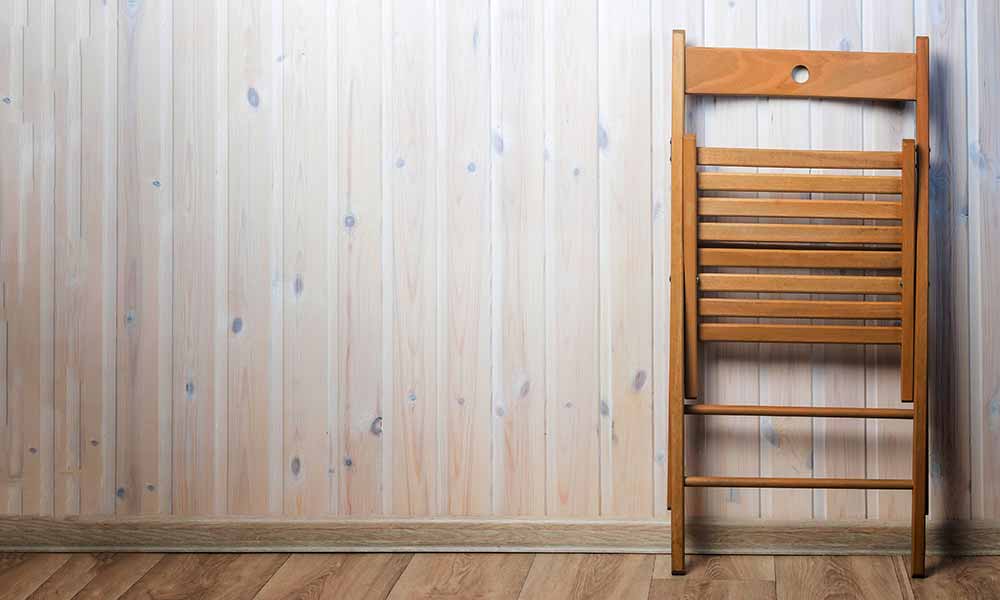
Wood is the most storage-sensitive material.
Extreme heat causes warping. High humidity swells the wood and can crack the finish. Dry cold is less harmful, but big swings in either direction are hard on joints and finishes.
Store wooden chairs in a climate-controlled space if possible. Indoors is almost always better than a garage or attic. A canvas cover helps buffer humidity changes.
Plastic and resin chairs
Plastic is the most forgiving material in storage. It does not rust, does not rot, and does not warp from humidity.
Cold is the one concern. Hard cold can make polypropylene brittle, so a chair that gets cracked in a freezing garage is not a defect, it is cold damage. Store plastic chairs where the temperature does not drop below freezing if you want them to last.
Padded chairs
The fabric is the weak point. Moisture trapped in foam or between the vinyl and the frame leads to mildew and odor.
Let padded chairs dry fully after use before stacking or bagging them. Store them in a dry space. If the storage spot is at all damp, individual bags protect the fabric and are worth the extra step.
Small spaces: fitting chairs into a home without a garage
Not every storage situation is a garage with a wall to spare. Here are the options that work in smaller spaces.
Under a bed: A standard flat folding chair slides under most beds. A row of four or six fits in the space of a queen or king bed, out of sight and easy to pull out.
In a closet: Hooks on a closet wall hold one or two chairs behind hanging coats. The chairs stay vertical, the clothes still hang, and nothing takes extra floor space.
Behind large furniture: A flat-folded chair fits in the gap between a sofa and a wall. Not glamorous, but functional for one or two occasional chairs.
A simple rule for choosing your storage method
The number of chairs decides the method.
- 1 to 4 chairs: lean them flat against a wall or tuck them under a bed
- 5 to 12 chairs: a wall rack or hooks is the tidiest and most space-efficient solution
- 12 or more chairs: a chair cart or dedicated storage rack in a garage or utility room
Whatever the number, keep them dry, off concrete, and in a space where the temperature does not swing to extremes.
The chairs you store well are the ones still in good condition five years from now.
If you are still choosing which chairs to buy, the guide to the best folding chairs covers the main options by use and material.