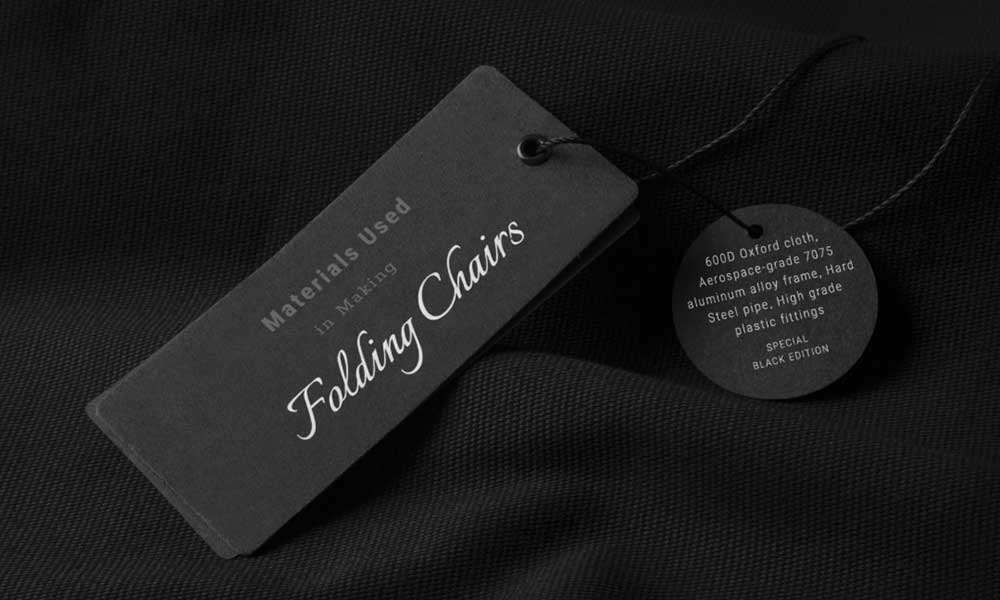
Materials Used in Making Folding Chairs
Most folding chairs are made from one of three materials: plastic, metal, or wood. Padded and mesh chairs are variations on those, usually a metal frame with a cushioned or fabric seat.
The material is the first thing to look at. It decides what the chair weighs, what it costs, whether it can live outside, and how long you can sit in it before you want to stand up.
So the real question is not what folding chairs are made of. It is which material fits the job.
Material is the main trade-off: resin and plastic for weatherproof and cheap, metal for strength, wood for looks indoors.
Plastic (resin)
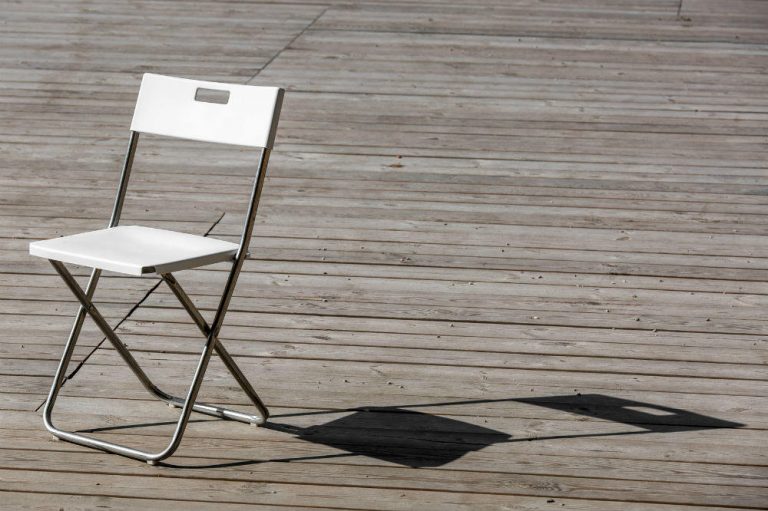
Plastic is the most common folding chair material, and the cheapest.
The plastic is usually polypropylene, a tough thermoplastic that stays light and shrugs off water and stains. A standard consumer plastic chair holds about 250 to 300 pounds.
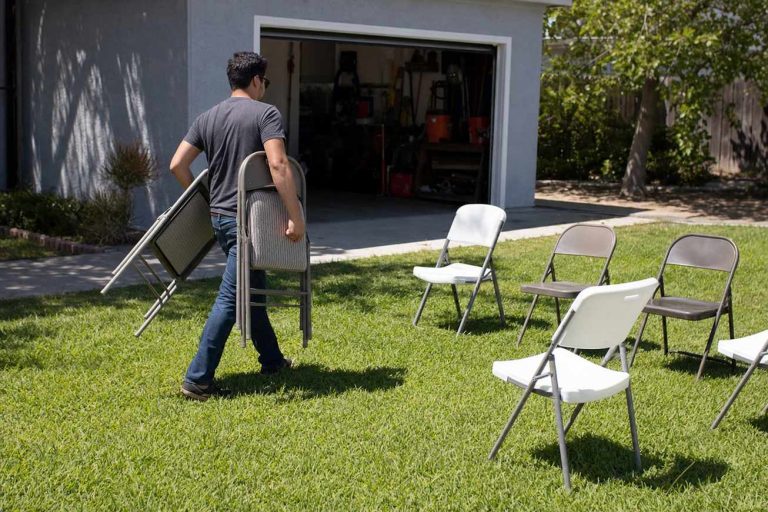
That is why plastic chairs are the default for events. They handle rain, spills, and a day in the yard without complaint, and they wipe clean in seconds.
They store and stack easily too. A stack of twenty lives in the garage until the next party.
The trade-offs are small. Plastic can crack in hard cold, and it never looks as nice as wood.
Sun is the other limit, since UV slowly makes cheap plastic chalky and brittle. That sun damage is what separates outdoor-rated resin from indoor plastic.
For outdoor events, budget seating, and anywhere a chair might get rained on, plastic is the right call.
When a leg cap splits, plastic chairs are also the easiest to fix with cheap replacement parts like leg caps, glides, and ganging clips.
Metal (steel and aluminum)
Metal chairs come in two very different metals, and the difference matters.
Steel is strong, cheap, and heavy. The frames are often 18-gauge steel tubing, double-riveted at the joints. That is what lets a metal chair carry more weight than a plastic one without flexing.
The downside is rust. Store a steel chair on a damp floor and it will show it.
Aluminum is the opposite. It weighs far less, it does not rust, and it costs more.
Aluminum is the frame you want when the chair gets carried a lot, which is why camping and portable chairs lean on it.
Both share one weakness. A bare metal seat is hard and cold, so these are not the chairs to sit in for three hours.
Choose steel for strength on a budget, aluminum when light and rustproof are worth paying for. Strength is what the weight rating measures, though the real limit depends as much on the test as the metal.
Wood
Wood is the best looking folding chair material, especially indoors.
Wood was also the original, going back to the ebony folding stools of ancient Egypt.
It blends with almost any decor, and it can be refinished or stained to match a room. A well made wooden chair lasts for years.
The cost is weight and weather. Wood is heavier than metal or plastic, so it is not what you haul to the beach.
Left outside it warps and grays, so it needs a cover or a spot under a roof. For long sits, a seat pad helps, because flat wood gets uncomfortable.
Wood is the pick for dining, weddings, and covered settings where the chair is part of the look.
Padded
A padded chair is a plastic or metal chair with an upholstered seat, usually foam under vinyl or fabric.
The padding is the point. These are the most comfortable folding chairs for long events, and they come in colors that match a theme.
You pay for that comfort two ways. They cost more, and the fabric needs protecting from weather, since a soaked cushion is slow to dry.
Reach for padded chairs when people will sit for hours, like a dinner or a long ceremony.
For all-day sitting, even padding is not enough on its own. That is the catch with a folding chair as a desk chair.
Mesh
Mesh is the newest material here. A breathable fabric is stretched over a metal frame, which keeps the sitter cool on a hot day.
Mesh is comfortable, water resistant, and easy to clean, and the metal frame keeps it sturdy.
The catch is price. Mesh chairs cost more than plastic, metal, or padded.
For hot weather and outdoor events where breathability beats price, mesh earns its keep.
Camping and portable chairs
Folding camping chairs are built differently. The frame collapses into a compact bundle, with aluminum for the lightest packs and steel where strength matters more than ounces.
The seat is polyester or nylon mesh stretched across that frame.
Camping fabric is rated by denier, the thickness of the thread. You will see 600D and 1000D on the spec sheet.
600D is the common choice because it is strong, affordable, and lighter. 1000D is tougher but adds weight.
For most people, a 600D seat is plenty.
Which material should you choose?
The short answer: match the material to where the chair will live and how long people sit in it.
- Cheap and weatherproof for events → plastic (resin)
- Maximum strength → steel
- Light and rustproof for carrying → aluminum
- Looks and indoor dining → wood
- Comfort for long sits → padded
- Hot weather and breathability → mesh
- Backpacking and camping → aluminum frame with a 600D polyester seat
The materials overlap more than the marketing suggests, so do not overthink it.
Decide where the chair will spend most of its life, pick the material that suits that spot, then compare specific folding chairs within it. If you are weighing styles as well, the guide to the main types of folding chair covers the rest.