Folding Chair Parts (and How to Replace Them)
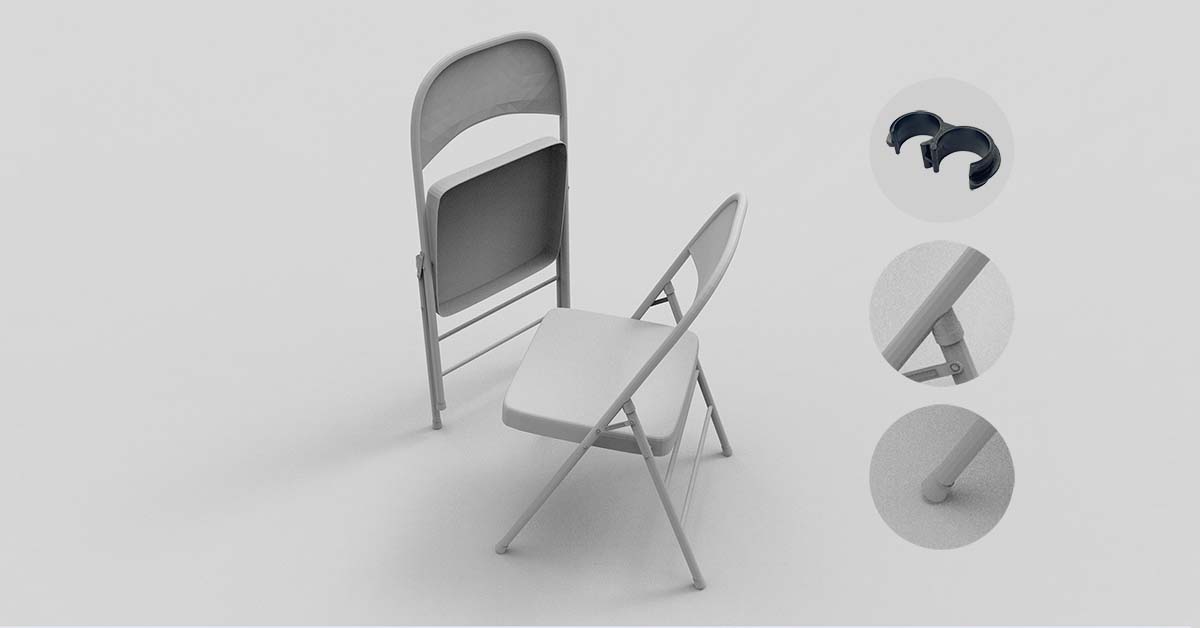
The most commonly replaced folding chair parts are leg caps, stability plugs, ganging clips, hinges and rivets, seat and back panels, and bolts or braces. This guide covers what each part does, how it fails, and what to look for when you need one.
Most of these are cheap and easy to swap yourself.
The hinges and locking parts matter for safety too, since a worn lock is one way a folding chair collapses.
If you need a new chair rather than a part, the guide to the best folding chairs covers the full range.
Leg Caps and Glides
Leg caps are the rubber or plastic tips that cover the bottom of each chair leg.
They do two jobs. They protect the floor from scratches, and they keep the chair from sliding.
They also crack, split, or fall off with regular use.
Once one goes, the bare metal tube scores your floor with every drag.
Match the cap to your tube size before you order.
Folding chair frame tubes are most commonly 3/4-inch, 7/8-inch, or 1 inch in outside diameter. Measure the outside of the tube, not the inside of the old cap.
A chair with a lightweight plastic seat typically uses 3/4-inch tubing. A padded metal seat usually runs 7/8-inch.
To install, twist the cap on rather than forcing it straight.
If the fit is tight, a thin ring of liquid dish soap inside the cap helps it slide on. If the tube is airtight, a pin hole in the cap bottom releases the air lock.
Stability Plugs (V-Tips)
Stability plugs, sometimes called V-tips or stabilizers, sit at the top of the rear legs on metal and padded folding chairs.
When the chair is open, they brace the frame and stop the back legs from spreading and wobbling.
They matter most on chairs used for hours at a time, like event or banquet chairs.
A missing plug is usually the reason a chair rocks even on flat ground.
These only fit metal and padded-seat chairs, not plastic or wood.
Most are sized for a 7/8-inch frame tube. Check your tube diameter before ordering.
Ganging Clips
Ganging clips connect chairs into a fixed row.
One clip attaches at the seat-to-back junction, a second at the lower leg frame, and the pair locks two adjacent chairs together.
They are common in churches, conference rooms, and any space where rows need to stay straight.
Without them, chairs slide apart and the row creeps out of line.
Ganging clips are an add-on accessory, not a factory-installed part, so older chairs often lack them.
They do not affect how the chair folds or stores.
When buying, confirm the clips fit your chair model.
Clip designs vary by manufacturer. A universal plastic clip works for most standard metal folding chairs, but padded or resin chairs may need a model-specific version.
Hinges and Rivets
A folding chair’s hinge is the pivot point that lets the seat fold down to the frame.
Most chairs use double-riveted hinges at the seat corners or along the side rails.
Rivets work loose before they fail completely. The sign is a click or wobble when you sit down.
Left alone, a loose rivet wears the hole oval and the joint turns sloppy.
Replacing a rivet is straightforward if you have a pop rivet tool.
Drill out the old rivet, match the diameter, and set a new one.
On cheaper chairs, the hinge plate itself may be the failure point. In that case, a new chair is often cheaper than sourcing a matched plate.
The materials used in making folding chairs explains how frame metal grade affects how long rivets hold.
Seat and Back Panels
The seat and back are the most visible parts to wear.
On resin chairs, the seat snaps or bolts to the frame and can be replaced on its own if the frame is still sound.
The common failures are cracks from UV exposure, upholstery tears on padded seats, and yellowing on white resin chairs left outdoors for years.
Flash Furniture and a few other commercial-grade suppliers sell replacement seats for their own chairs.
The seat and frame must be the same model family, so note your model number before searching.
Replacing the seat saves the frame and keeps the set a matching color.
It makes the most sense on commercial chairs, where the frame is heavy-gauge and expensive to replace.
Bolts, Braces, and Cross Bars
The hardware holding the folding mechanism together includes carriage bolts, lock nuts, and sometimes a cross bar between the front and rear leg pairs.
Bolts work loose with repeated folding.
A chair that opens unevenly or locks with a loud pop usually has a worn or missing bolt.
Use the same diameter and thread pitch as the original.
Most standard folding chairs use common metric or SAE hardware sold at any hardware store. Bring the worn bolt with you to match the thread.
Cross bars on commercial-grade chairs are a structural member, not trim.
If one is bent or cracked, the chair is unsafe to use until it is replaced or retired.
Where to Find Parts
Search by tube diameter or chair model number, and the right part is usually easy to find.
Most leg caps, stability plugs, and ganging clips are sold in packs of 20 to 50 on major retail sites.
For seat panels and hinges, check the original manufacturer first.
Flash Furniture, National Public Seating, and Lifetime list replacement parts for many of their models.
If you are storing the repaired chairs, the guide to the best way to store folding chairs covers how to protect both the frames and the new parts between uses.