How People Actually Get Hurt by Folding Chairs (and How to Avoid It)
Almost everyone has pinched a finger in a folding chair. It turns out that pinch is not a fluke. It is the single most common way these chairs hurt people.
Safety regulators have the numbers. Between 2003 and 2017, the U.S. Consumer Product Safety Commission logged 153 incident reports and 105 injuries tied to children’s folding chairs and stools alone.
Most of those injuries trace to one moment: the chair folding or unfolding.
The pinch you have probably felt is the most common folding-chair injury there is.
A folding chair is safest when it is fully open and locked, and most dangerous in the half-second it folds.
The finger pinch is the main hazard
The folding action that makes these chairs handy is also what bites you.
Of the reports the CPSC reviewed, 90 involved pinching or shearing. That is the crushing or scissoring that happens at the hinge and the crossing frame as the chair opens or closes.
Most are minor. Some are not.
- The common version is a bruised or pinched finger at the hinge.
- The serious version, in the worst cases, was a fracture or even a finger amputation.
Children are especially at risk, since small fingers fit right into the pivot points. That is why the safety standard exists for children’s chairs in the first place.
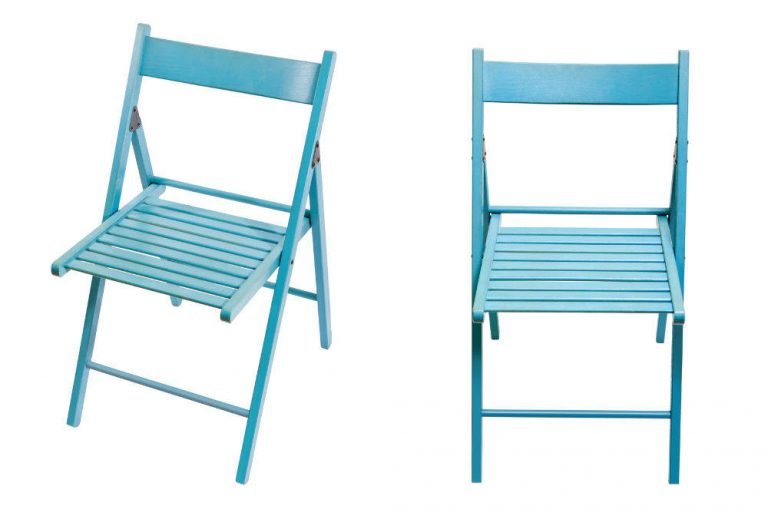
The pinch happens at the hinge and the X-frame, in the moment of folding.
Collapse and tip-over
The second hazard is the chair giving way when you do not expect it.
In the same data, 22 incidents involved the chair tipping over, and others involved a sudden collapse from a failed locking mechanism. A chair that is not fully locked open can fold under a person without warning.
Two habits make collapse more likely.
- Leaning back on the rear two legs, which loads joints the chair was not built to take.
- Exceeding the weight rating, which is a static test number, not a live-load promise.
A chair that is fully open, locked, and within its rating rarely fails. The trouble starts when one of those three is missing.
Most collapses come from a chair that was not fully locked open.
How to use a folding chair safely
None of this means folding chairs are dangerous. It means a few simple habits remove almost all the risk.
- Open the chair fully until it clicks or locks, every time. Do not sit on a half-open chair.
- Keep your fingers off the hinges and the crossing frame while you open or close it.
- Set it on level ground so it cannot rock or tip.
- Do not lean back on the two rear legs.
- Stay within the weight rating, with a margin.
With kids, add two more. Open and close the chairs for them, and check that the locking parts and hinges still work before each use.
Lock it open, keep fingers clear of the hinge, and keep it on level ground.
The bottom line
Folding chairs are safe seating. The risk is concentrated in two moments: the fold, where fingers get pinched, and the unexpected collapse, when a chair is not locked or is overloaded.
Both are easy to avoid. Open the chair until it locks, keep your hands off the hinges, sit within the weight limit, and watch small children around the folding action.
Lock it open, keep fingers off the hinge, respect the weight rating, and mind the kids.
If a chair’s locking mechanism feels loose or sticky, retire it. To choose chairs with solid locks and honest weight ratings, start at the folding chair buyer’s hub.