Can a Patio Umbrella Stand Without a Table?
Yes, a patio umbrella can stand without a table. It just needs a base built for the job.
A market umbrella needs a heavier base once the table is out of the picture. An offset umbrella is designed to stand alone from the start.
The table was never required. It was doing part of the job for free.
That job does not disappear just because the table does.
What the table was actually doing
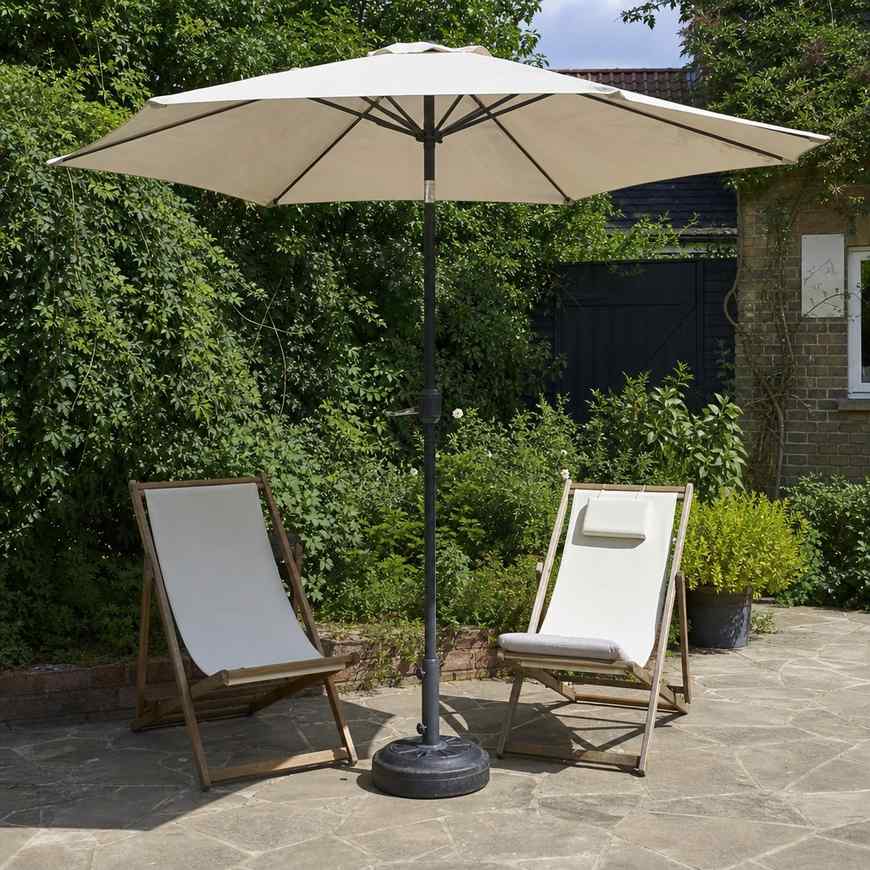
A table-mounted umbrella gets help it never has to ask for.
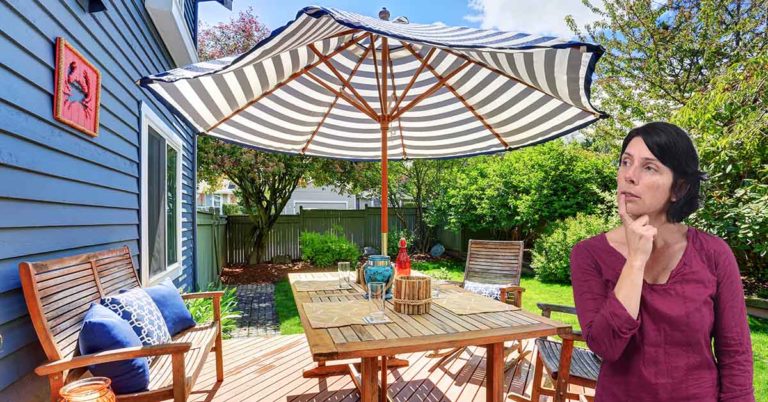
The table’s own weight and its four-legged footprint resist the umbrella trying to tip, on top of whatever base sits under the pole.
That is why a table-mounted base only needs to weigh around 50 pounds. The table shares the load, not just holds a cup of coffee.
Most people never notice this until the table is gone. Then the umbrella starts to lean in a breeze that used to be a non-issue.
What changes when the table is gone
Pull the table away, and the base is on its own.
Wind pushing against the canopy creates a lever, with the pole as the arm. The base is now the only thing resisting it.
A base sized for table duty is not sized for that. It was only ever meant to add stability, not carry the full load alone.
This is the part buyers miss most: a freestanding setup does not need a slightly bigger base. It needs a base built for a different job entirely.
Canopy size still matters inside that. A small market umbrella around 7 feet needs less base than the same style at 11 feet. But the jump from table-mounted to freestanding changes the base class on its own, before canopy size is even part of the math.
Not every wobble is a weight problem, either. If the umbrella shifts or spins right where the pole meets the base, that is a loose fit, not an underweight base. No amount of added weight fixes a loose connection.
Freestanding options, ranked
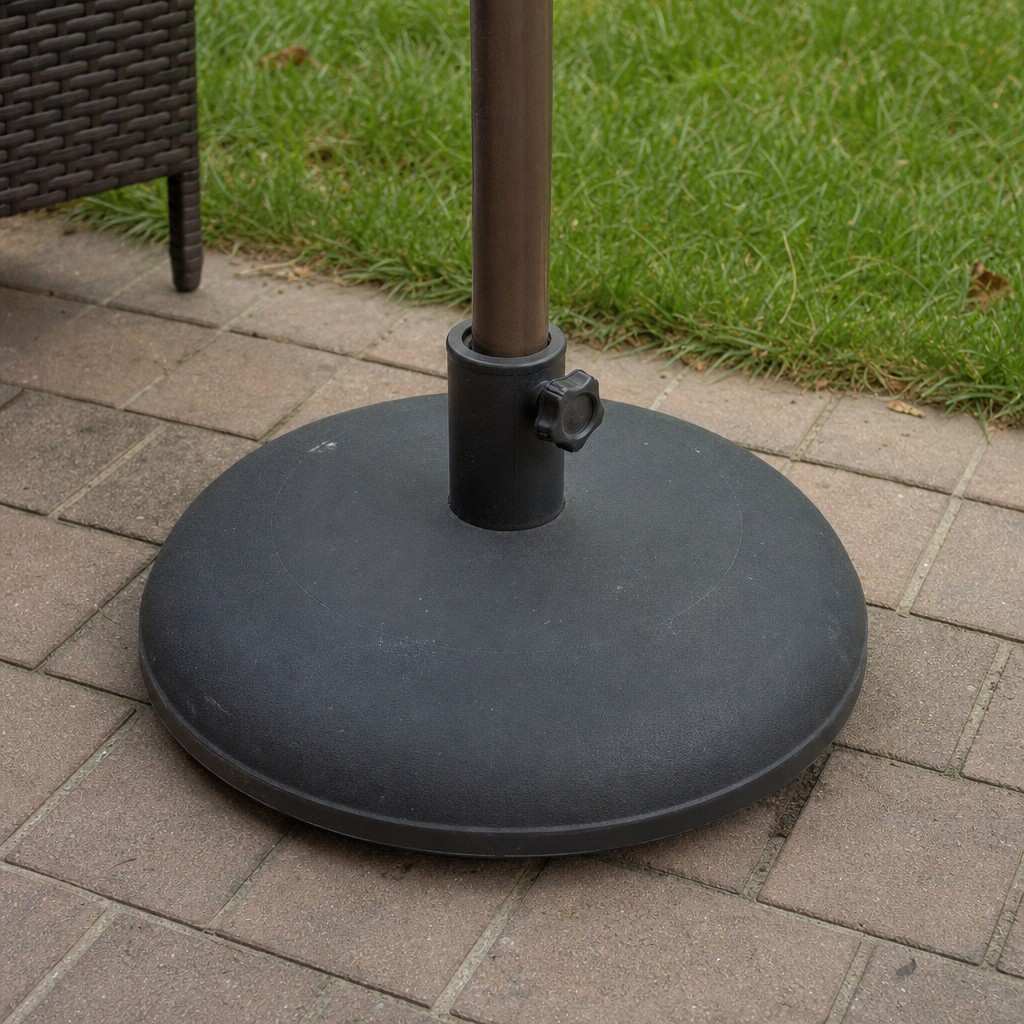
Three setups actually hold an umbrella up with no table involved.
-
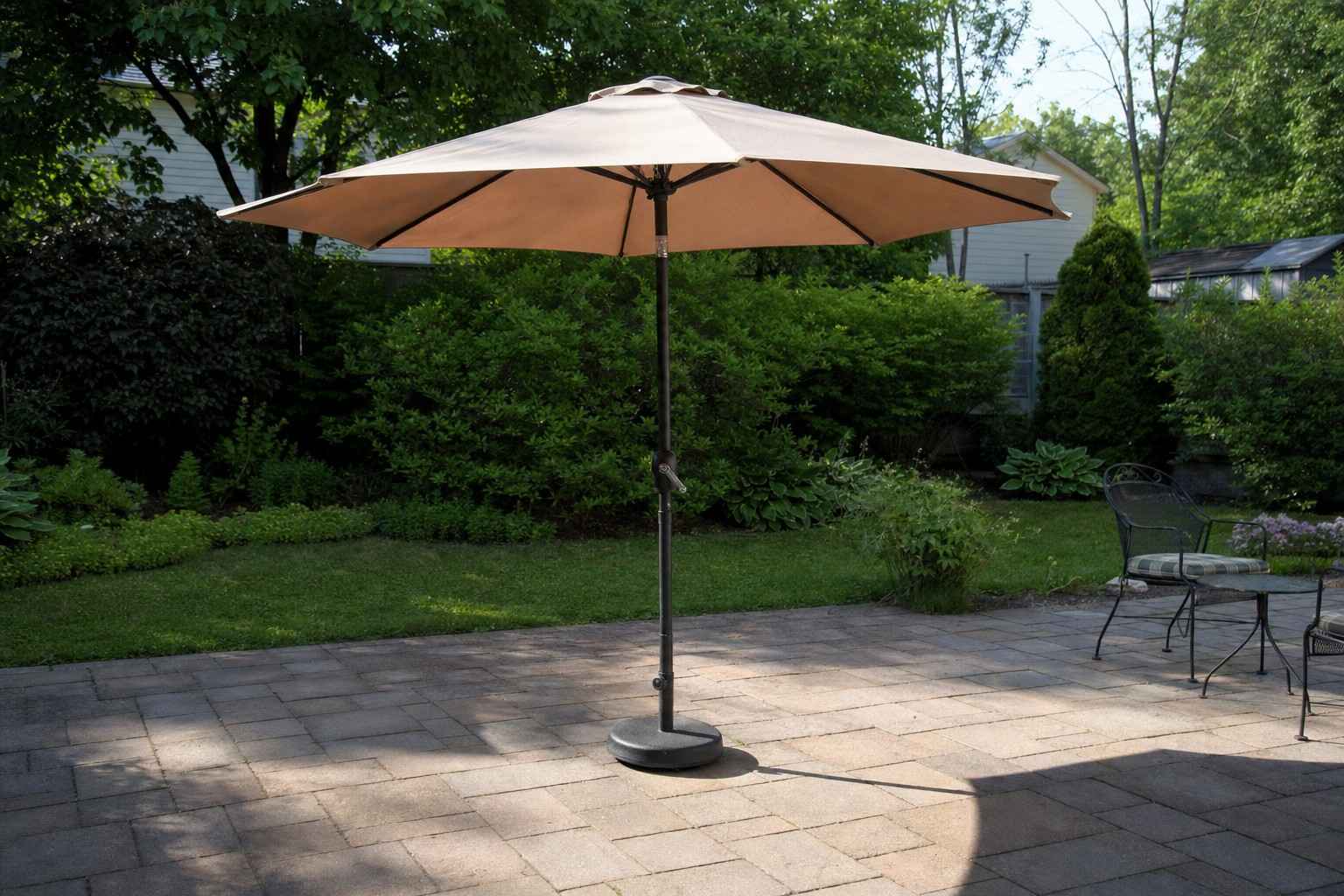
A heavier base under a market umbrella. A standard market umbrella standing on its own needs roughly 80 pounds of base weight. That is close to double the table-mounted number, since the base now carries the full lever load by itself. The guide to patio umbrella bases breaks down the weight class for every setup, table-mounted through offset.
-
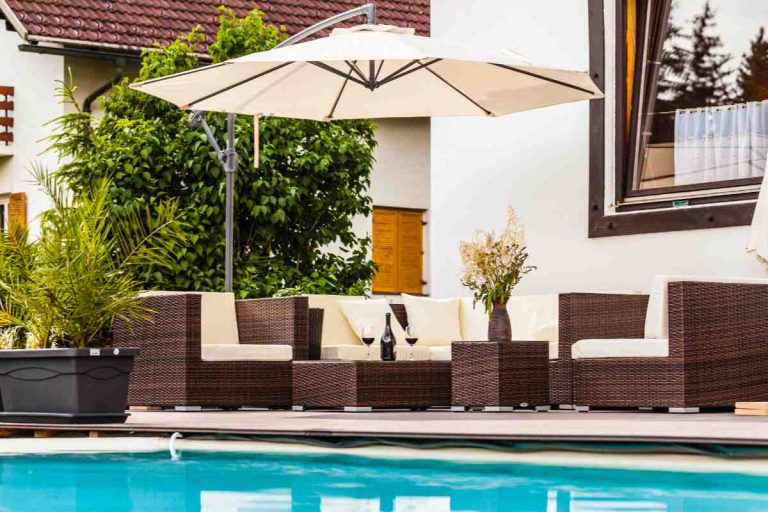
An offset umbrella, built for exactly this situation. Its canopy hangs off to the side on a cantilever arm instead of sitting over the pole. That clears the floor completely under a sofa or a lounge chair. The tradeoff is a heavier base, since the offset shape multiplies the tipping force. The comparison of an offset versus a market umbrella covers which shape actually fits a given space.
-
A mounted or in-ground sleeve. The pole sits in a sleeve set into concrete or bolted to a deck. The structure itself resists the tipping force, so no weighted base is needed at all. It is the least portable option, but the sturdiest once installed.
Ranked by effort: a heavier base is the easy swap, an offset umbrella is the redesign, and a sleeve is the permanent fix.
One mistake shows up more than any other. A table-mounted base gets pressed into freestanding duty because it is already on hand, and it simply is not heavy enough for the new job. If a base came from a table setup, check its weight class before trusting it alone.
Wind exposure without a table
Losing the table also means losing whatever wind-blocking it was giving the setup, even by accident.
A table, chairs, and everything sitting on top of them add drag and mass near the base. A freestanding umbrella no longer has any of that nearby.
An open patch of lawn or a bare deck corner sees more direct wind than a spot boxed in by furniture.
That is not a reason to skip going freestanding. It is a reason to size the base for the actual location, not the average one.
A corner lot, a spot near open water, or a yard with nothing blocking the wind deserves the heavier end of the weight class. A sheltered patio tucked against the house can usually stay closer to the minimum.
An umbrella can still lean after the base gets upgraded. The next fix usually is not a bigger base again.
The guide on keeping a patio umbrella from falling over covers the rest of the checklist. It runs from pole fit to closing the canopy before a storm.
The short answer
A table was never the thing holding a patio umbrella up. It was sharing the load with the base, quietly enough that most people never noticed.
Match the base to the setup instead of the table.
A patio umbrella stands on its own just fine. That might mean a heavier market base, an offset design built for open space, or a sleeve anchored into the ground.