How to Measure the Size of a Patio Umbrella?
Umbrella size means canopy diameter, measured rib tip to rib tip across the top of the open canopy.
The right size covers your table or seating area plus about two feet of overhang on every side. If a base or table maker states a number outright, use that instead.
Reader-supported: if you buy through links on this page we may earn a small commission, at no extra cost to you.
That two-foot rule is the one number to remember. Everything below is how to put it to work.
How to Measure an Existing Umbrella
You only need one rib and a tape measure. Height barely matters here.
Diameter is the number that decides fit, and one rib gives you the answer.
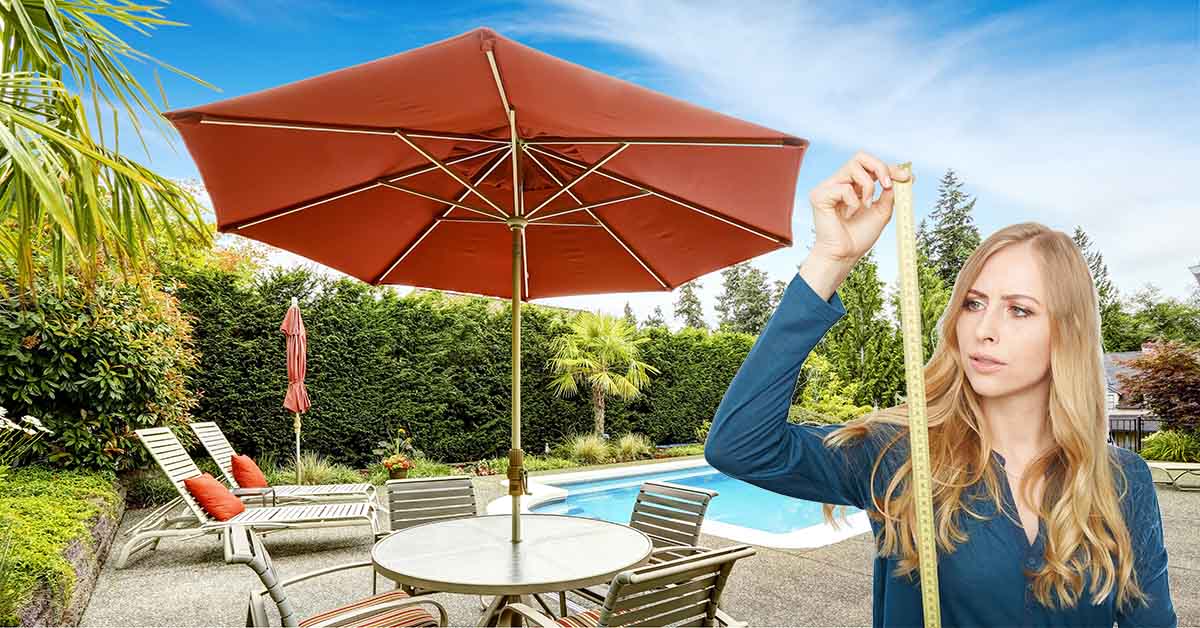
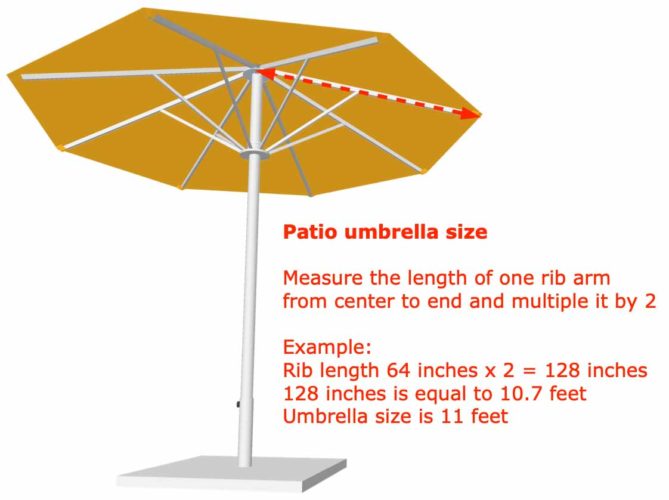
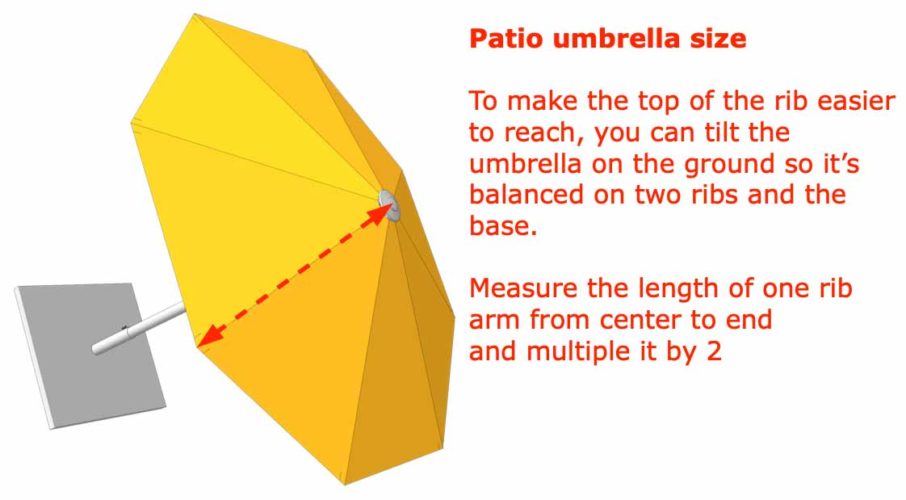
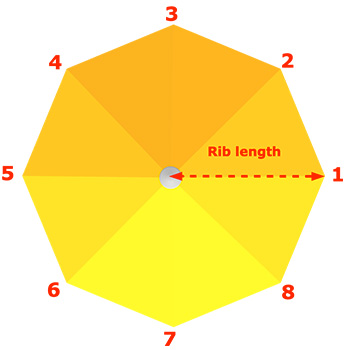
Open the umbrella all the way until the canopy is fully extended. Measure one support rib from the center hub out to its tip. Multiply that number by two.
A rib that is hard to reach standing up is easier to measure lying down.
Open the umbrella fully. Tilt it onto the ground so it balances on two ribs and the base. Measure from there.
A 45 inch rib doubles to 90 inches. That rounds to a 7.5 foot canopy. That is the whole calculation.
Crank height and pole diameter
Crank height tells you whether the umbrella clears a table or bar.
Measure straight up from the base of the pole to the bottom of the crank mechanism. That gap is what keeps the umbrella from crowding a table edge or a row of chairs.
Pole diameter matters just as much before buying a base or a table.
Wrap the tape around the pole itself, right where it sits inside a table hole or a base receiver.
Read the diameter straight off the tape. Most outdoor tables use a fairly standard pole hole, a spec the patio umbrella buyer’s guide covers in more detail.
A freestanding or offset base skips the table hole entirely. It uses its own receiver socket instead, so check the base’s listed opening against the pole diameter you measured, not against the table spec.
Matching a replacement canopy to your frame
If the frame is sound but the fabric is faded or torn, the fix is a new canopy on the old ribs. Not a whole new umbrella.
The same rib length and arm count that sized the original umbrella is what a replacement listing is built around.
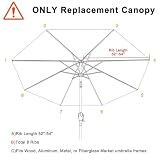
A replacement canopy from Abccanopy on Amazon shows the pattern manufacturers follow. It is a 9 foot canopy built for an 8 rib frame, with each rib running 52 to 54 inches from center to tip.
Four things decide whether a replacement canopy actually fits:
- The number of ribs on the frame
- The rib length, center to tip
- The pre-cut hole at the top, sized for the pole
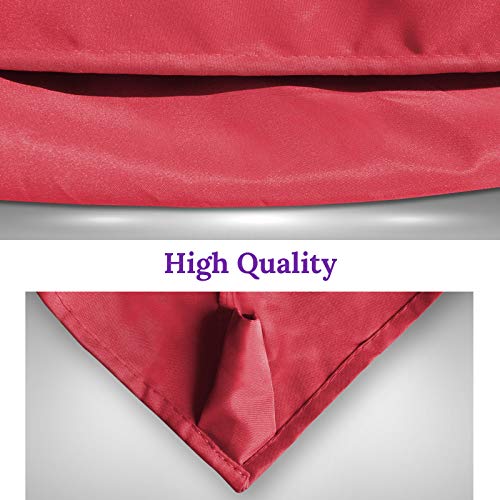
- How snugly the rib pockets grip the arm ends
Manufacturers rarely publish exact pocket dimensions. Measure your own ribs before ordering rather than trusting the frame size alone.
Rectangular and square canopies work the same way, just measured along the sides instead of diagonally.
A replacement from BenefitUSA covers a 10 by 6.5 foot rectangular frame with six ribs. The long ones run 69.8 inches plus or minus half an inch. The short ones run 37.8 inches plus or minus half an inch, with a 2.36 inch top opening.
Sizing a New Umbrella to Your Table
Match the canopy to the table, not to what looks impressive on a shelf.
The umbrella should extend past the table’s edge by about two feet on every side. That covers everyone at the table through a full meal.
| Canopy size | Recommended table size | Base weight |
|---|---|---|
| 6 ft | 30 inches | 35 lb |
| 7 ft | 48 inches | 45 lb |
| 8 ft | 45 inches | 55 lb |
| 9 ft | 62 inches | 65 lb |
| 10 to 11 ft | 82 inches | 75 lb |
| 12 ft or larger | Cantilever or offset design | 75 lb, plus sandbags or ground anchoring |
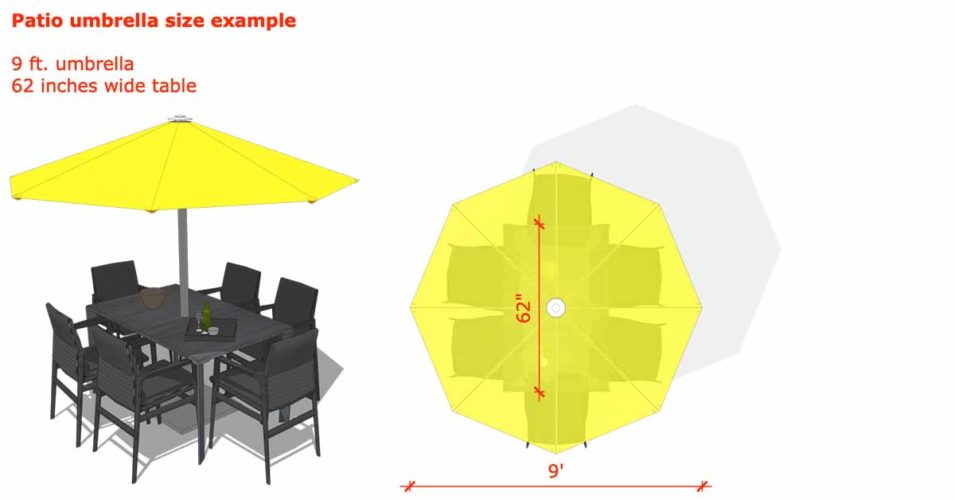
A 9 foot canopy over a 62 inch table sits in the middle of this range. Big enough for a full dining set, without swallowing a small patio.
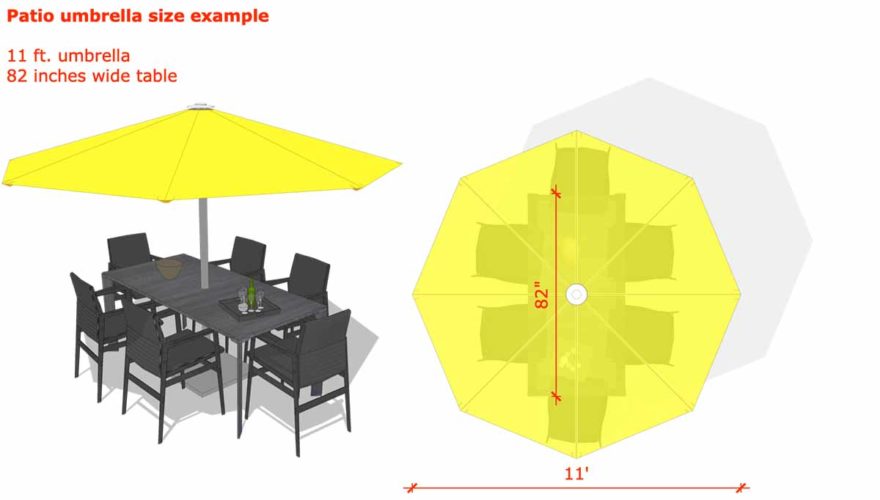
Manufacturers vary these figures somewhat. Treat the table above as a starting point, then confirm against the umbrella’s own listing before ordering.
Match the canopy shape to the table shape too. A rectangular table wants a rectangular canopy. A round table wants a round one, so the shade reaches the corners or the edges instead of leaving a gap.
Two placement checks matter as much as the size number.
Leave clearance between the canopy and any roof overhang above it. Keep the umbrella away from a grill or outdoor kitchen, since heat and open flame can damage the canopy fabric.
Sizing a New Umbrella for an Open Seating Area
A freestanding or offset umbrella follows the same two-foot rule. Measure it against the seating group instead of a table.
Measure the outer footprint of the chairs, a sofa, or a lounge cluster. Then add roughly two feet of canopy overhang on each side that needs shade.
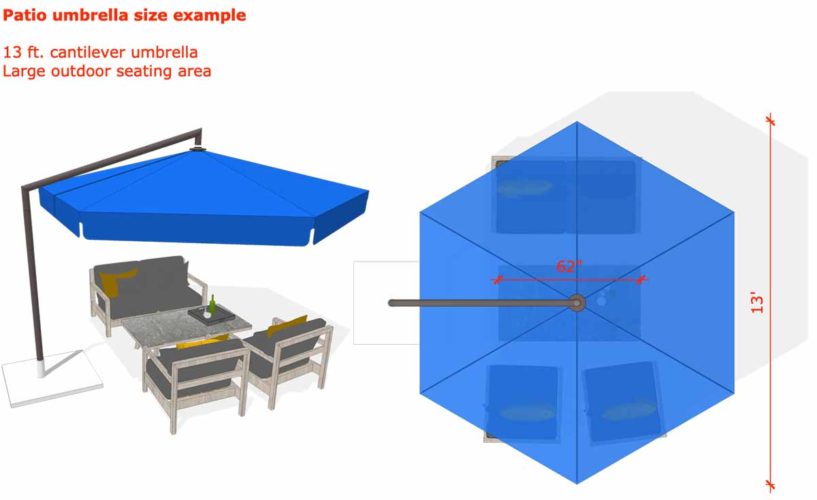
An offset or cantilever design is usually the right shape here. Its canopy hangs off an arm instead of sitting over a center pole, leaving the floor clear underneath the seating.
The offset versus market umbrella comparison covers which style actually fits an open layout, versus a table that already has a pole hole in it.
Base weight climbs with canopy size the same way it does over a table. A freestanding or offset umbrella carries more of that load on its own, since there is no table to help resist tipping.
Getting the Base Weight Right
Base weight is not optional, and it is not included with most umbrellas.
Skipping it, or guessing low, is the most common reason a correctly sized umbrella still ends up on its side after the first real gust.
A table umbrella can lean on the table for some of the stability, so a lighter base still holds. A freestanding or offset umbrella has nothing helping it.
That is why its base needs to weigh meaningfully more for the same canopy size. The patio umbrella base guide breaks the weight classes down by mount type, with specific bases sized to each one.
The Bottom Line
Get the diameter right and the base weight right, and the umbrella stops being something you have to think about once it is up.
Measuring an existing umbrella comes down to one rib and a tape measure: length times two is the diameter.
Sizing a new one comes down to the same two-foot overhang rule, applied to a table or an open seating area. Then check it against a base heavy enough to hold it there.