Resin vs. Metal Folding Chairs: Which Should You Buy?
Resin and metal solve two different problems, not the same problem twice. If the chairs live outside or get rained on, buy resin. If you want the highest weight rating and the slimmest stack, buy metal.
Reader-supported: if you buy through links on this page we may earn a small commission, at no extra cost to you.
A folding chair is bought for a job: events, camping, spare seating, or daily use. The right chair depends on the job, not the price.
That is the whole decision here, once you know what the chair will actually face.
Quick answer:
– Outdoors, patio, poolside, or stored in a shed or garage: resin.
– Commercial use, large guests, or repeated hard use: metal.
– Comfort matters more than either of those: padded metal.
– Occasional indoor use only: almost anything works, including what is already in your garage.
Material is the main trade-off: resin and plastic for weatherproof and cheap, metal for strength, wood for looks indoors.
The resin pick: built for weather and storage
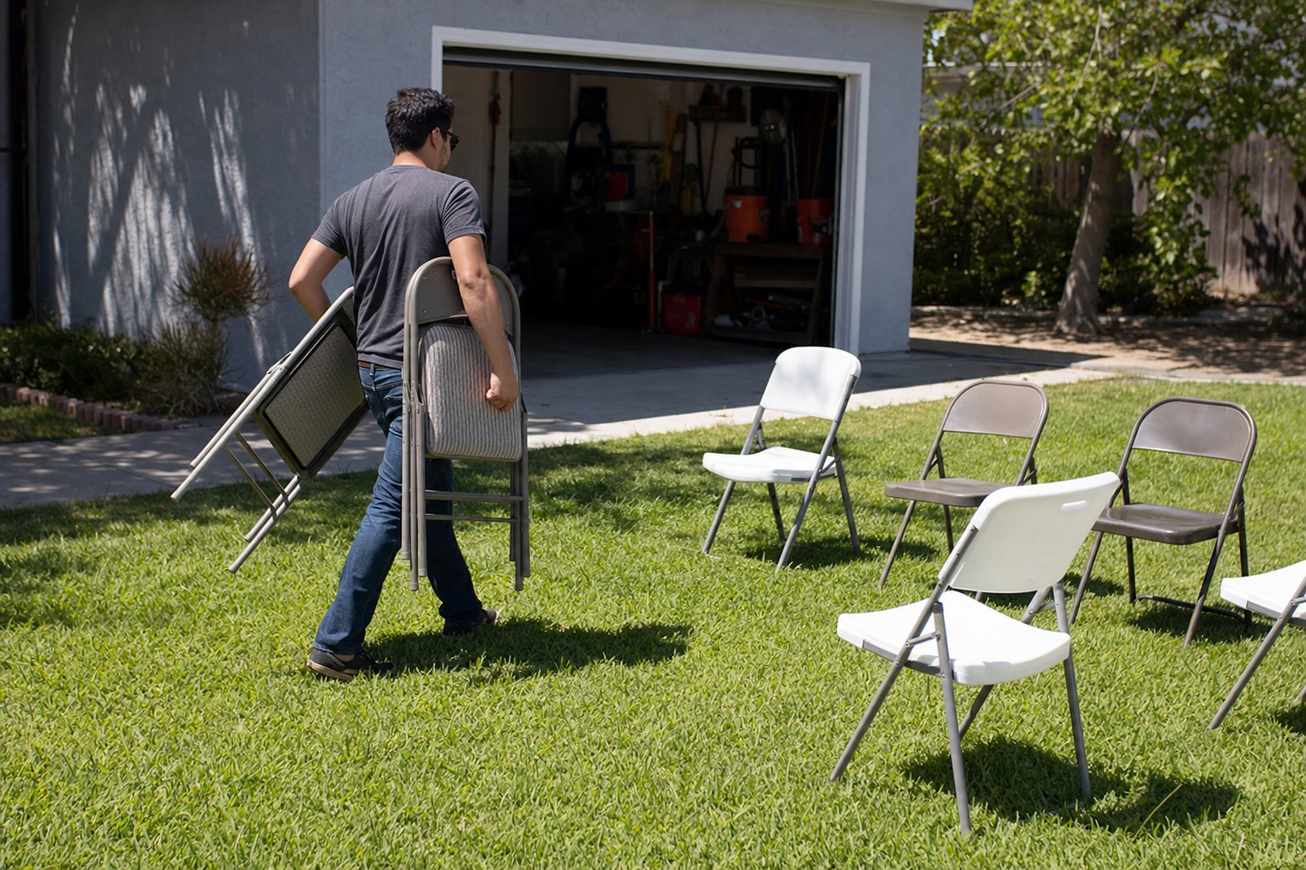
Resin does not rust, does not need a cover, and does not care if it sits outside all summer. That makes it the default for a patio, a pool deck, or anywhere chairs will not always make it back indoors before the next rain.


This is a heavy-duty resin chair, not the flimsy stackable kind.
Flash Furniture’s Hercules line carries an 800 pound rating. That puts it in the same weight class as the heavy-duty folding chairs built for events, just in a material that shrugs off weather.
It ships as a 4-pack, suited to a backyard gathering rather than one spare chair in a closet.
The metal pick: maximum strength, slimmest stack
Metal wins on two things resin cannot match. It offers a higher realistic strength ceiling for the price, and a thinner folded profile that stacks tighter in a closet or trunk.
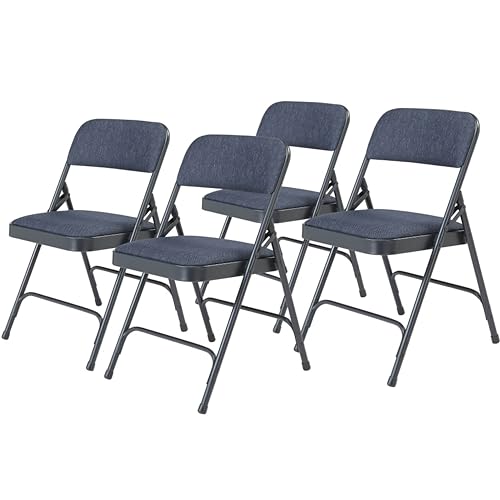
National Public Seating’s 2200 series is a commercial chair, the kind rented for weddings and church halls.
It carries a 480 pound static load rating. Folded, it stacks a couple dozen deep without eating a whole garage wall.
It is a bare steel seat, so check the comfort section below before ordering a stack of these.
Want padding? The mid-ground option
A vinyl-padded seat closes most of the comfort gap without giving up the metal frame’s strength and stack profile.

Cosco’s padded steel chair keeps the metal frame but adds a vinyl-padded seat. It holds up better than upholstered fabric and sits more comfortably than bare steel when dinner runs long.
Weather and rust: where resin wins outright
Resin cannot rust, and that single fact settles most outdoor-storage questions on its own.
Leave a resin chair out through a rainy week and it dries off with nothing to show for it. Leave a scratched metal chair out the same week and rust can start at any exposed edge or screw.
The catch with resin is sun, not rain.
Long UV exposure fades the color and can make the plastic brittle over years. The full mechanics are in why resin fades in the sun, but the short version is simple. Shade or a cover extends resin’s life more than anything else you can do.
Metal needs a dry spot or a rust-resistant finish to last outdoors at all. If your chairs live in a garage and only come out for use, that difference matters less.
Strength and weight ratings: what the number actually buys
Most standard folding chairs hold 250 to 300 pounds. Heavy-duty and commercial models are rated 800 to 1,000, and that rating is the real thing you are paying extra for.
Both picks above sit toward the strong end of that range: 800 pounds for the resin chair, 480 for the bare steel one.
Neither number is a guess. Both come from the maker’s own listing.
Both describe static load, the weight a chair holds sitting still, not the extra stress of dropping into the seat. The static vs dynamic load explainer covers that difference in full.
Buy above what you think you need if your group runs larger. A chair rated close to someone’s actual weight has no cushion left for a hard sit-down or an uneven patio stone.
Comfort and padding: not the same fight
Seat height on a standard folding chair runs about 17 inches, with seat width around 15.5 to 18 inches. Fit is close to identical across materials.
Comfort is a separate question from resin versus metal.
A comfortable folding chair has a contoured seat, a slight back angle, and enough width; padding helps for long sits, not short ones.
Bare steel and bare resin both feel fine for an hour of dinner or a quick event. Past that, padding starts to matter. That is why the padded steel option above exists as a middle ground.
Storage and stacking: the difference nobody warns you about
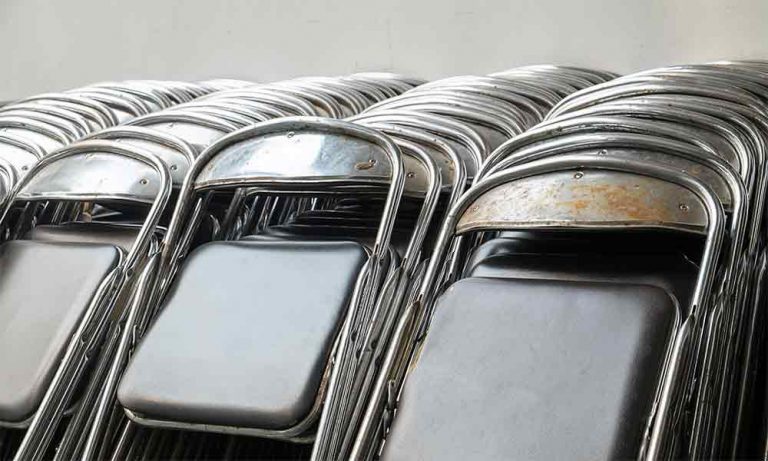
Metal folds thinner, so more chairs fit in the same trunk or closet shelf. Resin is bulkier per chair, and a stack of a dozen takes noticeably more floor space.
Most chair damage is storage damage, not use damage.
A chair dinged up in a damp garage corner failed at storage, not at holding someone’s weight. Either material, the right way to store folding chairs adds more years than the material choice itself.
Verdict by reader type
- Hosting outdoors regularly: resin. Weather resistance beats a slightly thinner stack every time chairs live outside.
- Running an event or renting to others: metal, for the higher realistic strength and the tighter stack in a van or storage room.
- Comfort-first for long dinners: padded steel, the middle ground that gives up nothing on strength.
- A once-a-year indoor gathering: buy whatever is cheapest, or use what is already in the garage. Nobody needs a commercial-grade chair for one dinner a year.
Bottom line
Resin if the chairs live outside. Metal if you want the highest strength and the thinnest stack. Padded metal if comfort matters more than either.
The material question is really about where the chair spends its life between uses. Answer that, and the rest of the decision is easy.