
How to Keep a Patio Umbrella From Falling Over
A patio umbrella that keeps falling over almost always has one real problem. The base is too light for the umbrella sitting on top of it.
Wind gets the blame, but wind only wins when the base was already carrying less weight than the umbrella needed.
Reader-supported: if you buy through links on this page we may earn a small commission, at no extra cost to you.
Sometimes it is a loose pole-to-base fit instead, or a table that is not actually doing its share of the work.
Start with base weight, then work down the list below.
What Is Actually Causing It
| Cause | What it looks like | Fix |
|---|---|---|
| Base too light | Umbrella tips in a light breeze, even closed | Move up a weight class |
| Wind exposure | Fine most days, tips during gusts or storms | Add shelter, close it, choose vents |
| Loose pole-to-base fit | Umbrella wobbles or spins before it tips | Shim it or add a cone wedge |
| Table not helping | Freestanding table shakes when the umbrella catches wind | Size the base as freestanding, not table-mounted |
Add Weight Before You Do Anything Else
Most tipping problems solve themselves once the base carries enough weight, not once the umbrella changes.
If the base is close but not quite enough, adding weight directly is the fastest fix.
A weight bag like the Gravipod fills with sand and sits around the stand you already own, no new base required.

A weight bag closes a small gap. It will not fix a base that was undersized from the start.
If the umbrella is still moving after adding one, the base itself is the wrong size, not the amount of weight on it.
How Much Weight Your Base Actually Needs
The base has to match how the umbrella stands, not just how big the canopy is.
The guide to patio umbrella bases breaks the weight classes down in detail, but the short version covers most yards:
- Table-mounted: roughly 50 pounds, because the table shares the load with the base.
- Freestanding: roughly 80 pounds, since the base is holding the umbrella up on its own.
- Offset or cantilever: 150 pounds or more, because the canopy hangs out to the side and multiplies the tipping force.
A base like this one from Best Choice Products gets a freestanding umbrella into that 80-pound range without a separate weight bag.
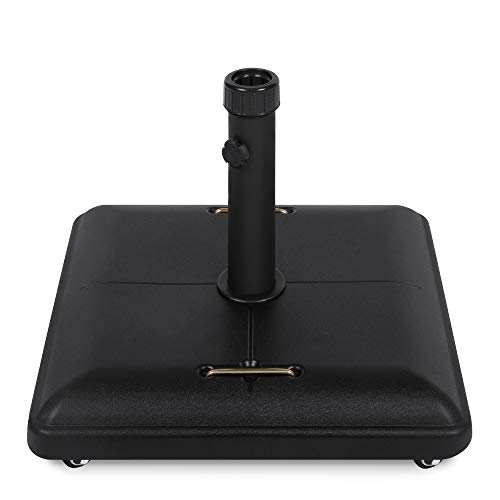
This one from Backyard Expression is another option built for the same freestanding class.
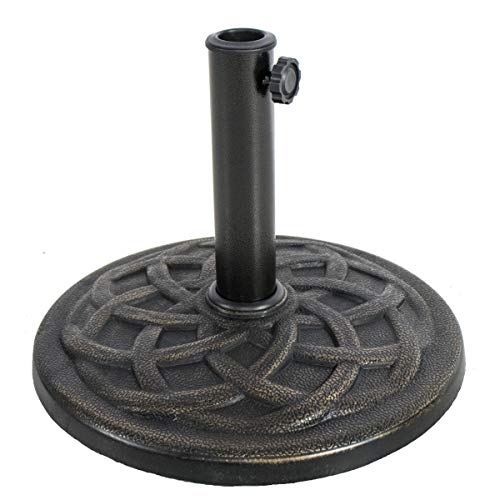
Buy for the umbrella you have now, not the smaller one you used to own. A base sized for a 7-foot canopy will not hold a 9-foot one steady, even fully weighted.
Fixing a Loose Pole-to-Base Fit
A wobbly pole is usually a spinning problem before it becomes a falling problem, and the fixes overlap.
The shim and cone-wedge tricks covered in how to keep a patio umbrella from spinning tighten the same connection that keeps the whole umbrella upright.
A pole that moves inside the base has less to resist a gust than one locked in tight.
That is worth fixing even on a base that is already heavy enough on paper.
When the Table Isn’t Actually Helping
A patio table can act as the base for a center-pole umbrella, but only if it is heavy and stable enough to plant the pole.
The patio umbrella table from Iwicker pictured below is a good example. It is light on its own, but there is room in the base area to add sand or bricks so it earns its keep.

A table that shakes when the umbrella catches wind is not actually supporting anything.
Treat that setup like a freestanding umbrella and size the base at roughly 80 pounds instead of the lighter table-mounted class.
Wind Habits That Actually Matter
Close the umbrella when nobody is sitting under it.
A closed canopy catches a fraction of the wind an open one does. Most falls happen to umbrellas left open and unattended, overnight or during a storm.

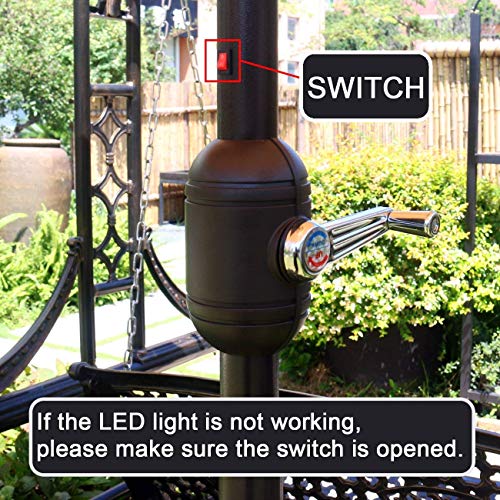
A canopy with vents sheds wind instead of fighting it.
Vents let air pass through the top of the canopy instead of pushing against the whole surface. That cuts the force a gust puts on the base.
Placement helps too. A spot near a fence, a wall, or a row of shrubs blocks some of the wind before it ever reaches the canopy.
Frame Material Matters Too
A heavier base holds an umbrella down. A stronger frame keeps it from breaking once it does go over.
Aluminum and steel ribs flex in a gust and spring back. That is exactly what a frame needs to survive an unexpected storm.
Wood and plastic frames look fine sitting on a showroom floor, but neither handles a hard fall well.
A wooden rib can splinter, and a plastic joint can snap clean through, turning a simple tip-over into a broken umbrella.
If the current umbrella already has a wood or plastic frame, the base and wind habits above matter even more. There is less margin left for the frame itself to absorb a mistake.
The Bottom Line
The umbrella is rarely the problem. The base underneath it is.
Match the base weight to how the umbrella stands. Fix a loose pole while you are at it, and close the canopy when the wind picks up.
Do those three things and falling over stops being something you have to think about.