Are Folding Chairs Bad for Your Back? (And Can You Use One as a Desk Chair?)
A folding chair is fine for a two-hour event. The trouble starts when it becomes your eight-hour desk chair.
More people are crossing that line since remote work moved into spare rooms and kitchens. A folding chair is cheap, already in the closet, and easy to tuck away after.
The problem is not the chair. It is the hours.
Folding chairs are built for short sits, not for shifts.
Why a folding chair is fine for short sits
For an hour or two, a flat folding chair is no real risk.
At an event or a dinner, you shift, stand, and move around often. Your back never locks into one position long enough for the lack of support to matter.
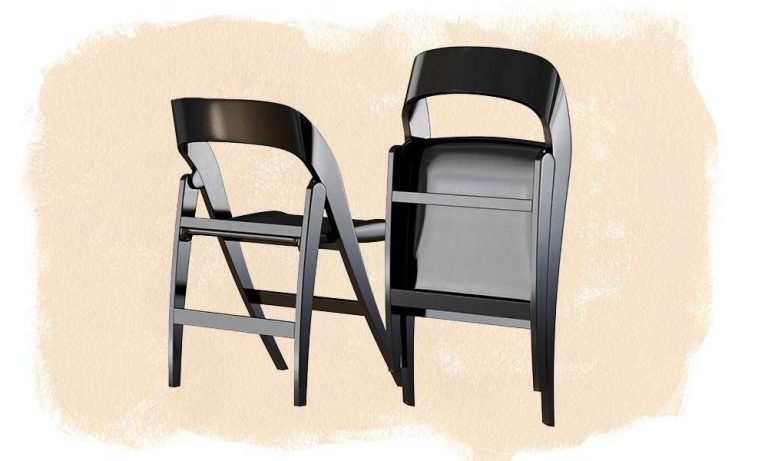
That is the job a folding chair is designed for. Practical seating that folds away when the event ends.
The 17-inch seat height of a standard folding chair even matches a dining table, so it fits a short working session in a pinch.
For short, active sitting, a folding chair is perfectly fine.
Why all-day work is different
Sit in that same flat seat for eight hours and the gaps start to show.
A good work chair meets a few basic ergonomic targets. OSHA’s workstation guidance calls for feet flat on the floor, thighs parallel, knees near 90 degrees, and adjustable lumbar support.
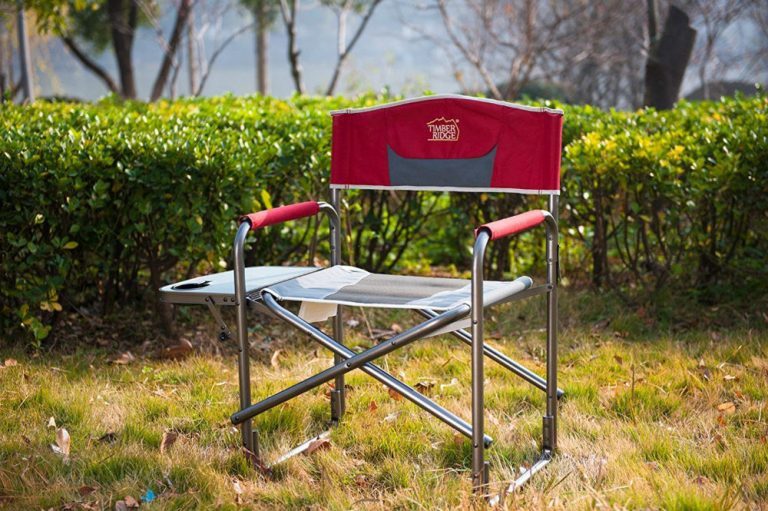
A folding chair offers none of that. It has one fixed height and a flat, hard seat.
The flat seat is the real problem. On a seat that sits parallel to the floor, the pelvis slowly tilts backward, the lower back’s natural curve flattens, and you slide into a slouch.
That slouch is what tires and strains the back over a long day.
- No height adjustment to match your desk, so wrists and neck pay for it.
- No lumbar support for the lower back.
- A flat, hard seat that encourages a backward pelvic tilt.
- No recline or movement built in.
A folding chair lacks nearly every adjustment a desk chair is supposed to have.
The bigger issue is how long, not what chair
Here is the part most people miss. The chair matters less than the clock.
Sitting still for more than 30 to 60 minutes raises pressure on the spine and back fatigue, even in an expensive chair.
So the fix is movement, not just a better seat.
- Stand or walk for a couple of minutes every half hour.
- Stretch your back and hips when you get up.
- Change position often rather than freezing in one pose.
A folding chair actually has one quiet advantage here. It is so plainly not a lounge chair that it nudges you to get up sooner.
Even the best chair needs you to get out of it regularly.
If a folding chair is your desk chair anyway
Plenty of home offices run on a folding chair. You can make one far more workable with a few cheap fixes.
- Add a lumbar cushion or a rolled towel behind your lower back.
- Put a firm seat cushion on top to level the seat and soften the hard edge.
- Use a footrest if the fixed seat sits too high for your desk.
- Raise your screen to eye level so you are not craning your neck down.
- Above all, get up and move on a timer.
A padded, contoured folding chair helps for longer sessions, though it is still a stopgap and not a true ergonomic chair.
A few add-ons and regular breaks turn a folding chair into a usable short-term desk seat.
The bottom line
Folding chairs are made for short, active sitting, and they do that job well. They are not built to be an all-day work chair.
For occasional desk use, a lumbar cushion, a seat pad, and frequent breaks make a folding chair workable. For full-time work, an adjustable chair is the better long-term answer.
Short sits, a folding chair handles fine. Full shifts, it does not.
If your back hurts, treat that as its own issue and see a professional, not just a new chair. To weigh comfort across chair styles, the folding chair buyer’s hub and the guide to comfort cover padding, seat shape, and support.