
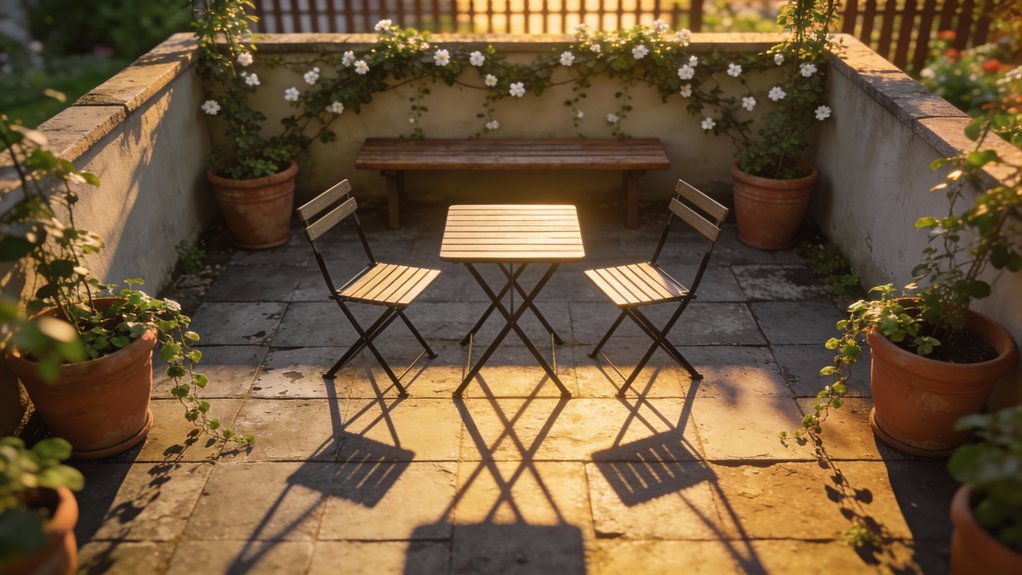
How to Arrange Furniture on Small Patios
You’ve probably heard that small patios can’t accommodate much furniture, but that’s not entirely true.
The real trick involves measuring your space first, then selecting pieces scaled appropriately to your dimensions. You’ll discover that strategic placement makes all the difference.
So where exactly should you start positioning things?
Measure Your Space and Choose Right-Sized Furniture
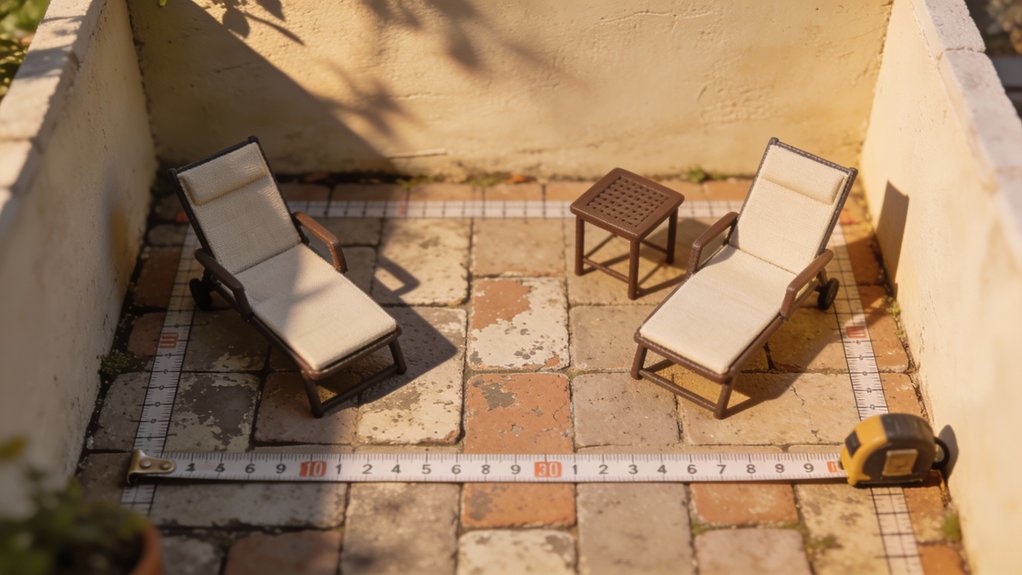
The first thing you’ll want to do is grab a measuring tape and map out your patio’s exact dimensions. Measure length, width, and note architectural features like railings or doors.
Start by measuring your patio’s length, width, and architectural features to establish a solid space-planning foundation.
This space planning foundation prevents buyer’s remorse on oversized pieces.
Next, consider furniture proportions carefully. Slim profiles and low heights maintain an open, airy feel.
You’re working with limited square footage, so every inch counts.
Select coordinated sets designed specifically for small spaces. They’re engineered to fit together seamlessly without creating visual chaos.
This approach eliminates guesswork and guarantees pieces complement each other perfectly.
Finally, choose lightweight materials like aluminum or weather-resistant wicker.
You’ll rearrange them frequently as your needs evolve throughout seasons.
Select Multifunctional Pieces to Maximize Usability
Once you’ve nailed down your furniture sizes, it’s time to think strategically about what each piece actually does.
Multifunctional furniture transforms your patio into a smart, organized space. You’ll discover that storage solutions and style versatility go hand-in-hand when you’re intentional about selections.
Consider these innovative options:
- Ottomans with built-in storage compartments
- Extendable dining tables for flexible entertaining
- Stackable chairs for easy storage
- Coffee tables doubling as storage units
- Benches providing seating and organization
Each piece pulls double duty, eliminating clutter while maintaining aesthetic appeal.
You’re fundamentally getting more functionality without cramping your compact outdoor area. This strategic approach maximizes every square foot available. For seating specifically, camping folding chairs offer lightweight portability and space-saving storage, making them ideal for small patios where every inch counts.
Position Furniture to Create Natural Traffic Flow
Now that you’ve selected multifunctional pieces, it’s time to arrange them thoughtfully.
Smart space optimization means positioning larger furniture along your patio’s perimeter. This strategy clears a natural pathway for movement and prevents guest congestion.
Your furniture layout should maintain 24 to 30 inches between pieces for comfortable navigation. Arrange seating to face each other or toward a focal point, sparking conversation effortlessly.
Maintain 24 to 30 inches between furniture pieces for comfortable navigation and effortless conversation.
Tuck small tables into corners to maximize efficiency without blocking traffic. Align dining and lounge areas near doors or stairs, creating seamless connections between indoor and outdoor living. Consider adding outdoor rugs to define different spaces and enhance comfort underfoot while maintaining your optimized layout.
Define Zones to Separate Activities and Create Intimacy
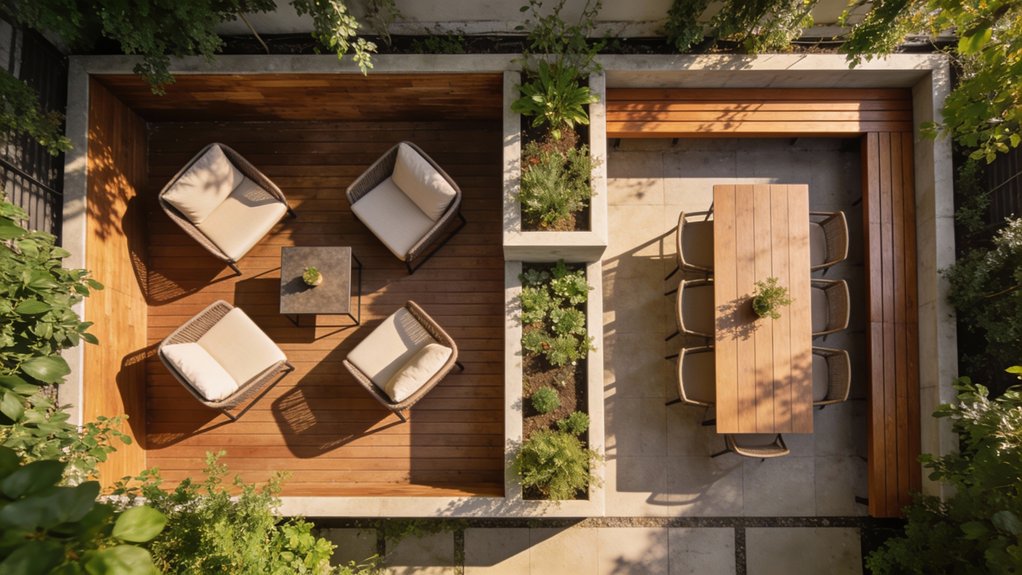
With your furniture positioned for smooth movement, you can now carve out distinct zones that serve different purposes.
Zone separation transforms cramped patios into functional spaces without requiring extra square footage.
Consider these innovative approaches:
- Arrange a small dining table in one corner and lounge seating elsewhere
- Layer outdoor rugs to visually define each activity zone
- Position vertical elements like planters or screens for subtle privacy
- Face chairs toward each other to encourage conversation during intimate gatherings
- Install a fire pit as your focal point to anchor the lounge area
This strategic layout maximizes your patio’s potential while fostering connection among guests.
Arrange Seating for Conversation and Comfort
Since conversation is what brings people together on a patio, your seating arrangement should encourage it.
Position chairs and loveseats in a U or L shape to face each other naturally. Space pieces about 3-5 feet apart so guests can chat comfortably without feeling crowded.
Anchor your arrangement with a focal point like a coffee table or fire pit. This creates a natural gathering spot everyone gravitates toward.
Use lightweight, movable furniture so you’ll reconfigure easily for different occasions.
Add cozy accents like cushions and throws for comfort.
Incorporate outdoor lighting to extend your patio’s usability into evenings, enhancing the inviting atmosphere.