What to Do About Slippery Deck Surfaces
Your deck’s slippery surface isn’t random: it’s moisture, algae, and debris working against you. You’ve probably noticed it’s worst in shaded areas or after rain.
Reader-supported: if you buy through links on this page we may earn a small commission, at no extra cost to you.
The good news? You can fix it.
But here’s what most people don’t realize: some solutions last months, while others protect your deck for years.
Why Your Deck Becomes Slippery and How to Identify It
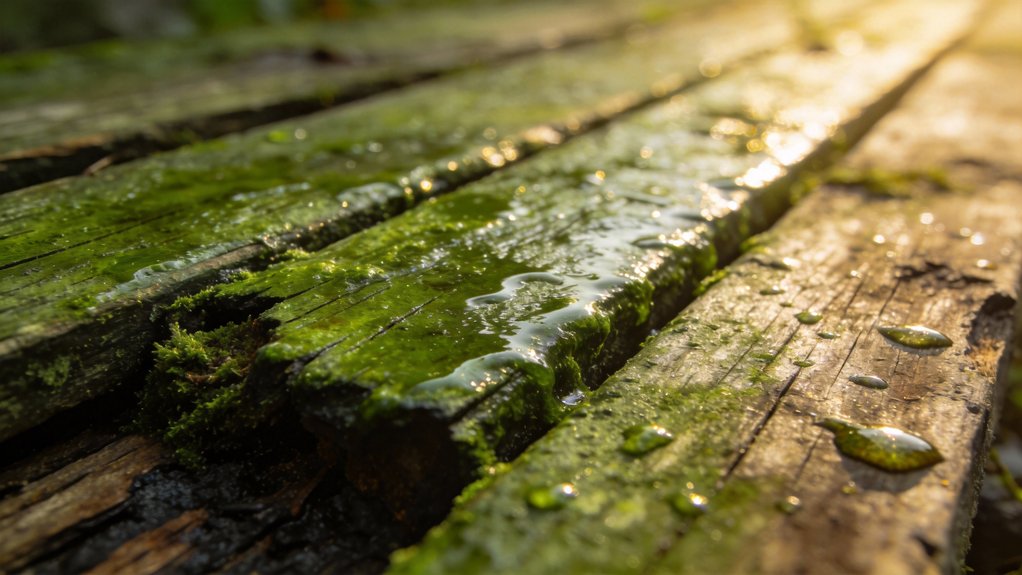
Because moisture loves wood, your deck’s surface becomes a perfect breeding ground for slippery culprits you can’t always see.
Mold, algae, and mildew thrive in damp conditions, coating your deck materials with a microscopic film.
Leaves and debris trap moisture, intensifying the hazard. Seasonal rain and snow create pooling water, while pollen adds another slick layer.
You’ll spot trouble during regular inspections: look for dark spots, greenish discoloration, or visible growth.
Modern traction alternatives like textured coatings or grip tape offer innovative solutions beyond traditional methods, helping you reclaim your deck’s safety.
Clean Away Algae, Mold, and Debris to Restore Traction
When you’ve identified the dark spots and slimy coating on your deck, it’s time to take action.
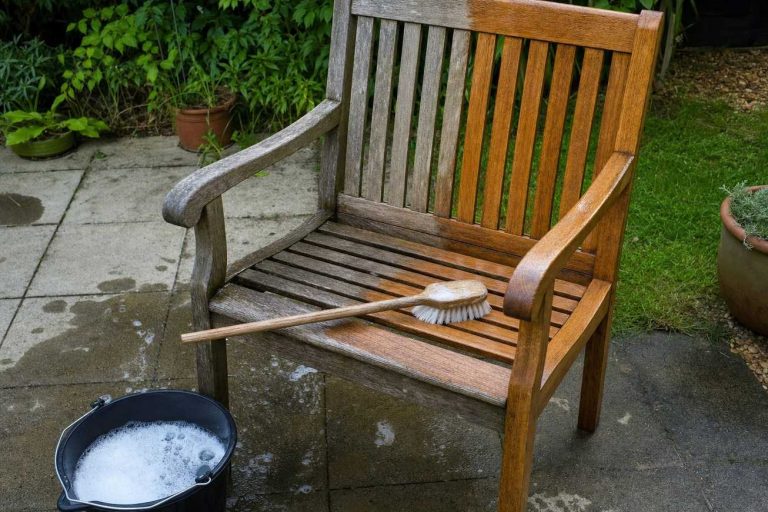
Start with a deck maintenance routine: sweep weekly to remove leaves and debris that trap moisture.
For stubborn algae and mold, mix laundry detergent with bleach. Apply this cleaning solution, wait 15 minutes, then scrub thoroughly.
Rinse everything with your garden hose to restore traction and remove residue.
Once yearly, use a pressure washer at a safe distance for deep cleaning.
This consistent approach keeps your deck safe and looking fresh.
Quick Fixes for Slippery Decks (Months of Protection)
Quick Fixes for Slippery Decks (Months of Protection)
After you’ve scrubbed away the algae and mold, you might want faster solutions that work right away.
After scrubbing away algae and mold, faster solutions deliver immediate grip and traction for your deck.
Several deck treatment options provide temporary grip solutions that kick in immediately:
- Anti-slip decking tape delivers instant traction on dry and slightly wet surfaces.
- Non-slip grit paint lasts three to five years with proper maintenance.
- HandiTreads aluminum treads feature raised buttons dispersing water and snow effectively.
- Rubber or fiber mats enhance grip in high-traffic zones temporarily.
- Regular sweeping prevents moisture buildup for several months of improved traction.
You’ll find these temporary grip solutions bridge the gap between cleaning and permanent fixes.
Pick whichever matches your deck’s needs and your timeline best.
Permanent Solutions: HandiTreads vs. Grit Paint Compared
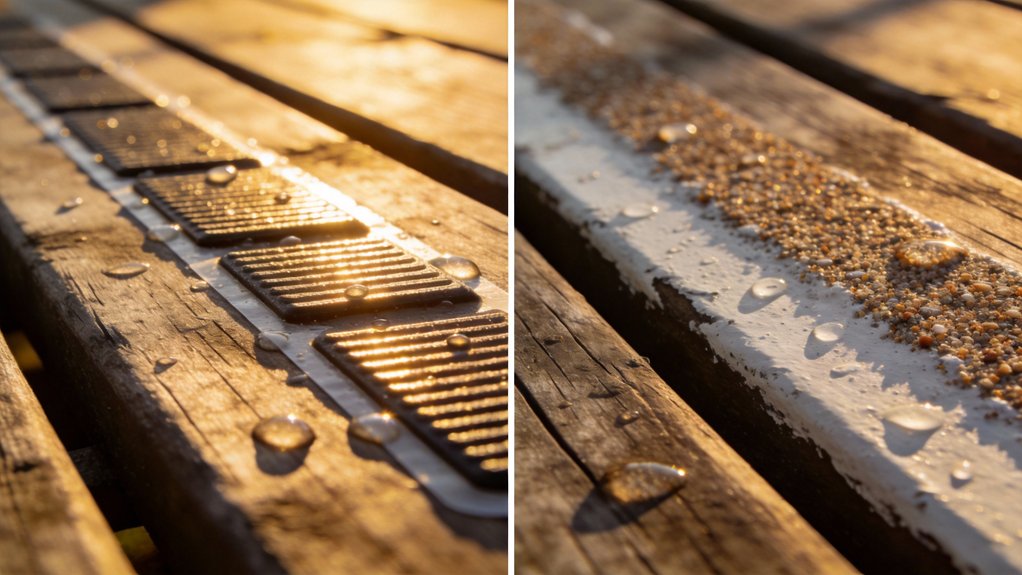
The choice between HandiTreads and grit paint comes down to durability, maintenance, and your wallet.
HandiTreads benefits include a lifetime residential warranty and zero surface prep needed. Their raised traction buttons self-clean while preventing water pooling, frost, and snow buildup.
Installation’s straightforward, making them genuinely low-maintenance. Grit paint drawbacks surface quickly.
You’re looking at reapplication every three to five years, assuming proper maintenance holds. Preparation’s tedious and application demands precision for effectiveness.
Color-matching your existing deck becomes frustratingly complicated.
HandiTreads ultimately deliver innovation through durability.
You’ll spend less long-term replacing grit paint repeatedly than investing once in lasting traction.
Year-Round Prevention Strategies
Beyond choosing the right permanent solution like HandiTreads, you’ll want to establish habits that keep your deck safe year-round.
Your maintenance routines should include:
Your maintenance routines should include weekly sweeping, seasonal inspections, annual coatings, winter grip mats, and proper drainage checks.
- Sweeping weekly to remove leaves and debris that trap moisture
- Checking seasonally for mold and algae growth in shaded areas
- Applying anti-slip coatings annually to maintain traction effectiveness
- Installing rubber grip mats on steps before winter weather hits
- Inspecting drainage systems to prevent water pooling
These seasonal adjustments protect your investment.
Winter demands extra grip mats.
Spring requires thorough cleaning and mold treatment.
Summer’s heat can crack coatings.
Fall brings leaf debris that accelerates slipperiness.
Staying ahead prevents accidents before they happen.