Best Patio Furniture Covers That Actually Survive Winter
Most patio furniture covers do not fail because of rain.
They fail because wind gets under the edge, works a strap loose, and flogs the fabric against the frame until it tears. Trapped moisture does the rest, turning a sealed cover into a mildew tent.
Reader-supported: if you buy through links on this page we may earn a small commission, at no extra cost to you.
The fix is not a thicker-sounding cover. It is the right combination of fabric weight, air vents, and tie-downs for the piece you are covering.
A dining set, a sofa, a stack of chairs, and a full winter setup each need something different, and picking the wrong shape wastes the good fabric underneath it.
The cover usually fails at the seams and straps before it fails at the fabric itself.
Dining set: one cover over table and chairs
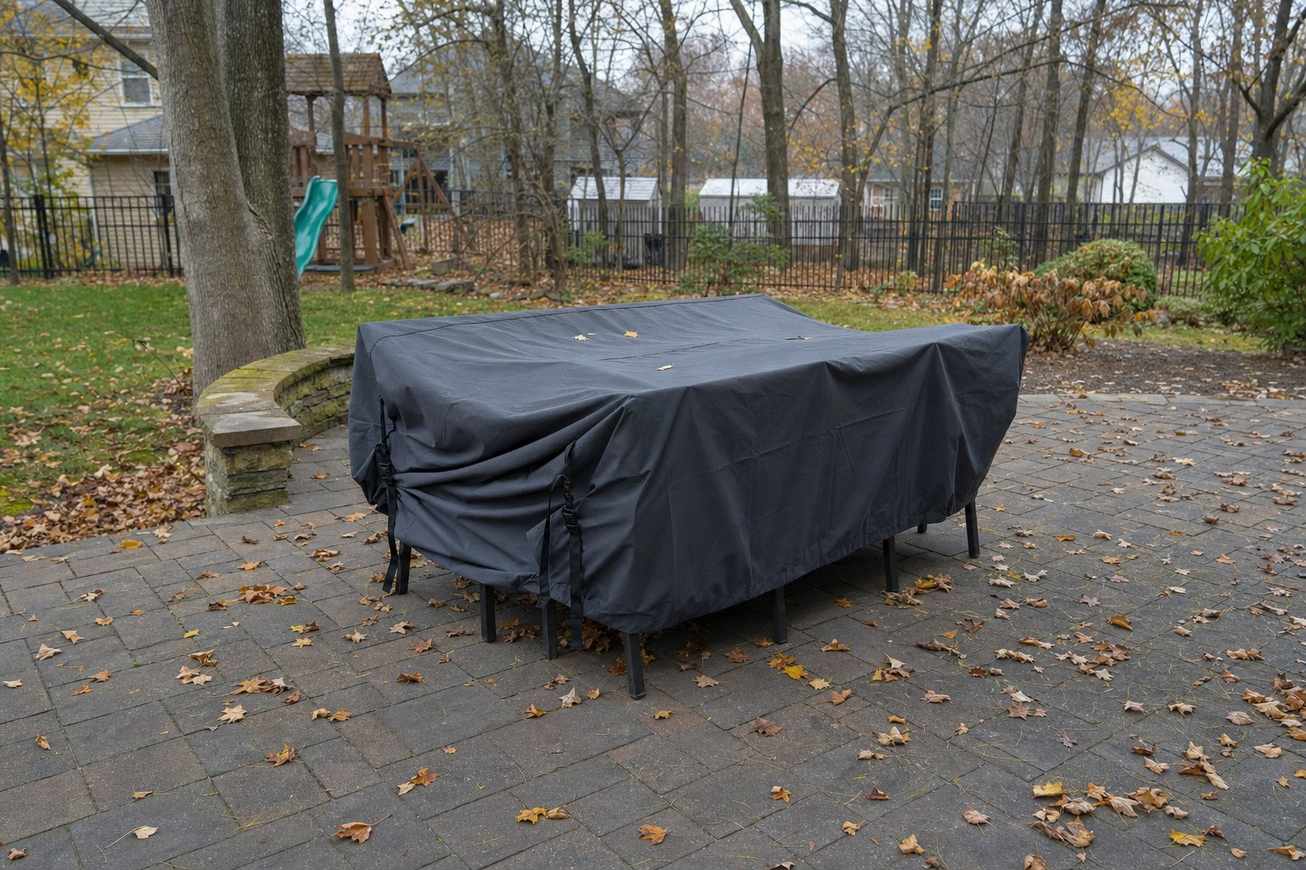
A dining set is the easiest piece to get wrong, because the cover has to clear both the tabletop and the chair backs without billowing in between.
The ULTCOVER Patio Table and Chairs Cover is built for that shape. It uses 600 denier polyester canvas with a waterproof backing, and it fits rectangular or oval sets up to 88 by 62 inches with four to six chairs.

Structured air vents sit at two sides of the cover. That is what keeps it anchored in wind instead of ballooning up and pulling at the seams, and it also cuts down on condensation underneath.
It sheds rain, hail, snow, dust, leaves, and bird droppings the same way. A larger version of the same cover fits sets up to 111 by 74 inches, so a six-to-eight chair table is not stuck improvising with two smaller covers.
Outdoor sofa: a fitted cover beats a tarp
A tarp over a sofa looks fine for a week. Then wind gets under a corner, and you are re-tying a bungee cord every time it rains.
The Gorilla Grip Outdoor Sofa Cover is cut for an 80-inch three-seat sofa instead of draped over one, which is most of the difference.
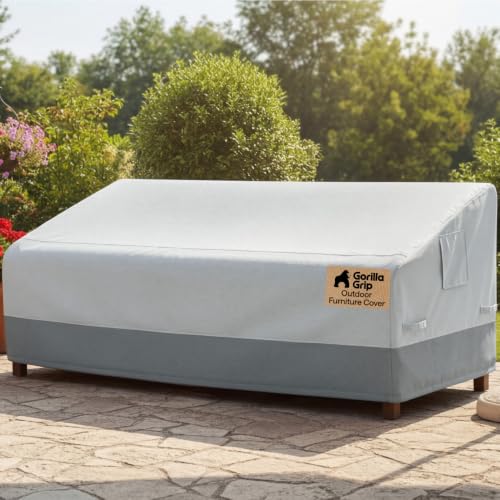
It is made from double-stitched 600 denier fabric that is fully waterproof, and it carries a UV coating that helps keep the furniture underneath from sun fading.
A 58-inch two-seater version of the same cover exists, so a loveseat does not have to be covered with sofa-sized fabric and extra slack.
Stacking chairs: cover the whole stack
If your patio chairs stack, cover them stacked. One cover over the whole tower beats pulling a separate cover over each chair, and it leaves fewer seams for wind to find.
The Vailge Stackable Chair Cover handles a stack of four to six chairs at 36 by 28 by 47 inches, sized for the column shape rather than a single seat.
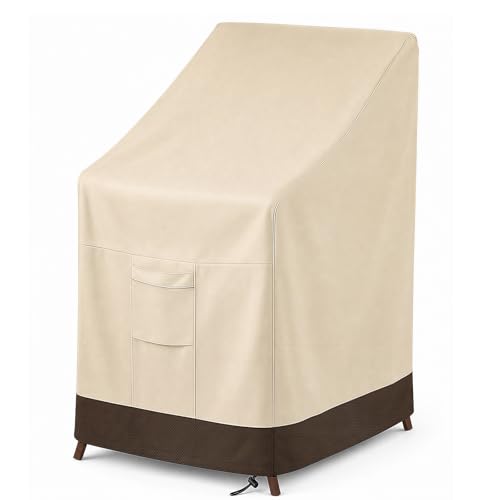
It is built from 600 denier Oxford fabric with a PVC layer and a waterproof laminated backing, plus a UV-stabilized water-resistant coating on top of that.
Stacking the chairs before covering them is the actual trick here. It turns four to six separate covering jobs into one, with a single edge for the wind to work against instead of six.
Full-set winter cover: buckles and drawstrings matter
Winter coverage is a different job than a summer rain cover, because the furniture sits under the same cover for months without anyone checking on it.
The Kipiea Winter Patio Furniture Cover is built around that reality. It uses 420 denier Oxford fabric, tear and UV resistant, rated at 128 GSM.

That 420 denier fabric is lighter than the 600 denier covers above, and on paper that reads like a downgrade. In practice, the job here is not fabric toughness. It is staying put.
Four windproof buckles and two thick adjustable drawstrings do that work. Wind is what kills a winter cover, not the weight of the snow sitting on it, and the buckle-and-drawstring system is what earns this cover the long winter assignment.
What to look for
Five things separate a cover that lasts a season from one that tears by the first storm.
- Denier rating. 600D is the heavy-duty class in this list. 420D is lighter fabric, and it needs a strong tie-down system to make up the difference.
- Air vents. Vents reduce the condensation that builds up under a sealed cover, and they stop the cover from billowing like a sail in wind.
- Tie-down system. Buckles, drawstrings, and straps keep the cover anchored through the exact conditions that tear a loose one off the furniture.
- Fit. Measure the actual piece before buying. A snug fit sheds wind better than a loose one, and a loose one flaps until something gives.
- Waterproof backing versus water-resistant fabric. A waterproof backing blocks water outright. Plain water resistance slows it down and eventually lets moisture through on a long soak.
Before winter, it also helps to work through preparing your patio for the season, since a clean, dry piece of furniture under a cover fares better than one put away wet.
The short version
Match the cover to the furniture’s shape first: a dining set needs vented coverage over two different heights, a sofa needs a fitted shape, and a stack of chairs needs one cover built for the column.
Favor 600 denier fabric with air vents where you can get it, since the vents do as much work as the fabric weight itself.
For a true winter setup, the tie-down system decides whether the cover is still on the furniture in March, not the fabric alone.
Whatever you buy, it is worth knowing how to keep patio furniture covers from blowing away and checking whether the cover can be washed, since a cover you can clean and re-tension will outlast one you replace every season. Either way, the goal is the same as protecting outdoor furniture year-round: buy the cover for the conditions it will actually face.