Gas vs. Wood-Burning Fire Pit: Which Belongs in Your Backyard?
Pick a fire pit by where it will actually sit, not by which one sounds more romantic. Gas wins on decks, pavers, and any tight spot near the house. Wood wins once you have open clearance and want real flame you can cook over.
Reader-supported: if you buy through links on this page we may earn a small commission, at no extra cost to you.
Here is the short version before the details.
- Deck, patio, or artificial grass: go gas.
- Tight side yard close to the house: go gas.
- Local burn restrictions are common where you live: go gas, or skip wood entirely.
- Open lawn with real clearance: either works.
- You want to cook over coals or hear real crackle: go wood.
- You only light a fire once or twice a summer: the pit you already own is probably fine.
A fire pit is not a style decision first. It is a placement decision that happens to come in two styles.
The gas pick: fine almost anywhere the rules allow a flame
A gas fire pit turns on and off like an appliance. That is exactly what a deck or patio needs.
There is no smoke drifting toward the neighbors, and no embers landing on artificial grass. No ash to sweep up the next morning either.
That matters most on the surfaces where an open flame draws the most scrutiny.


The Ciays fire pit table is CSA listed. That is the one certification worth checking on any gas unit before you buy.
It runs on propane, puts out 50,000 BTU, and its 28 inch table surface sits on a steel frame built to stay put.
Before you set one this close to seating, it is worth reading what actually makes a fire pit table safe.
The wood pick: real fire and coals with room to burn
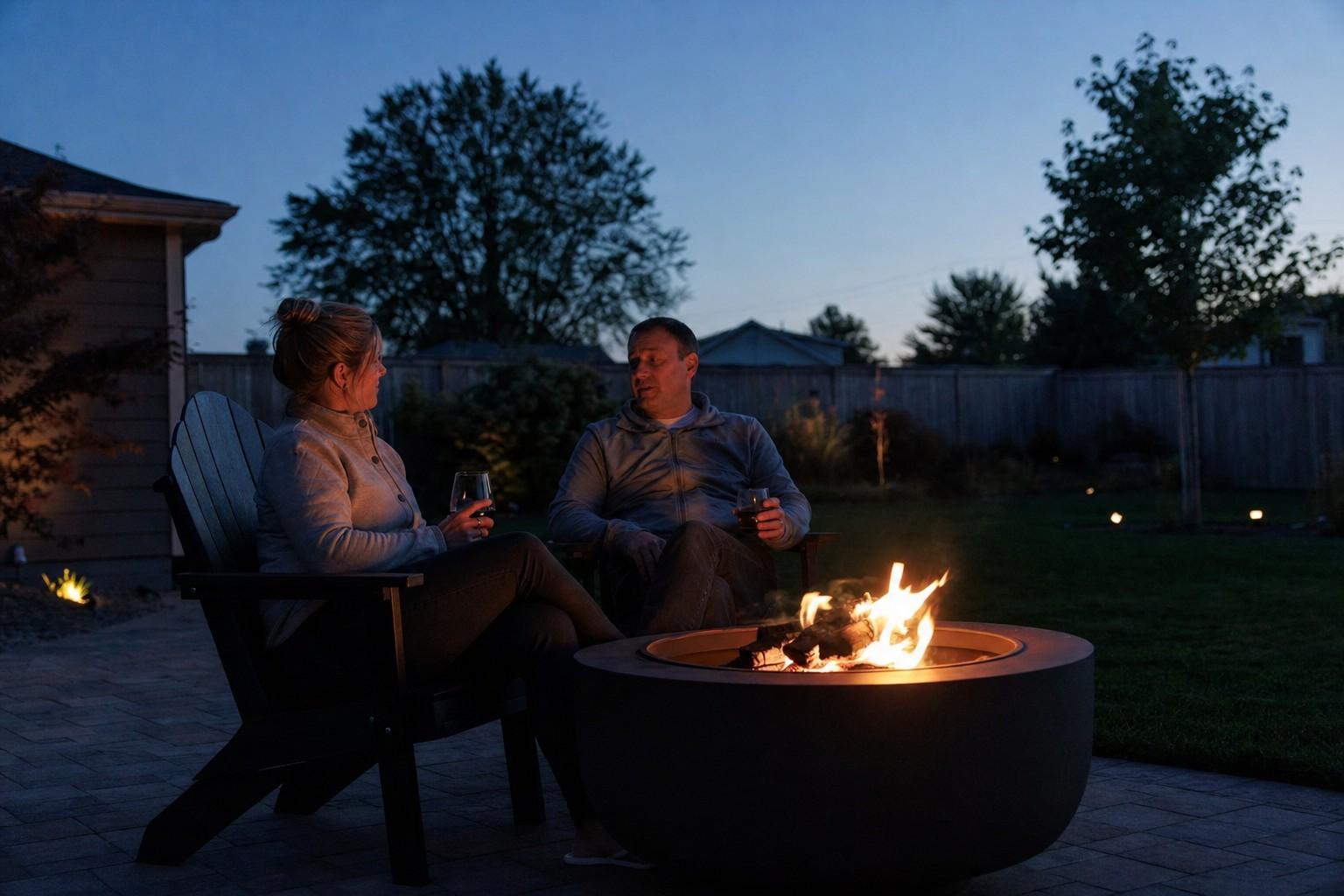
Nothing replicates the sound, smell, and heat of an actual wood fire. That is the entire case for buying one.
A wood-burning pit needs genuine open clearance. Sparks travel, and smoke drifts further than most people expect.
It is not a deck appliance. It is a backyard centerpiece for a spot with room around it.

The OutVue pit is a 36 inch wood-burning fire pit that comes with two grill grates, a lid, and a poker. It is set up to cook over just as much as it is to sit around.
Placement and surface decide more than you think
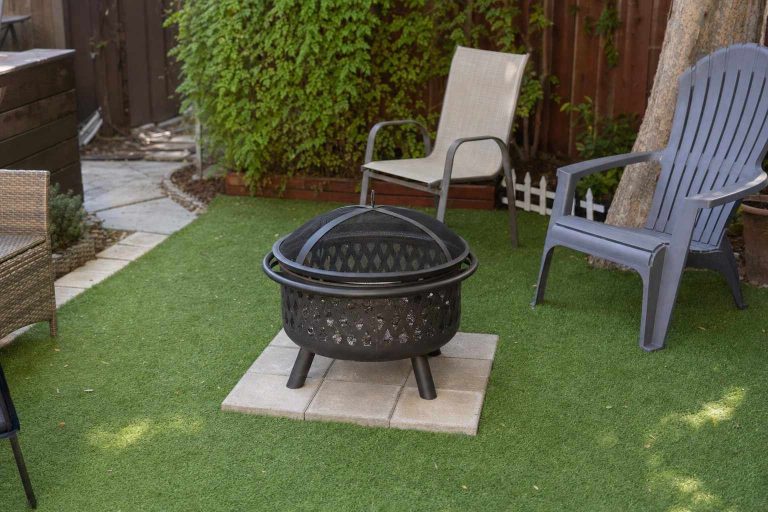
A wood fire radiates heat downward and throws the occasional ember. Setting one directly on artificial grass risks a melted patch.
The surface under the fire pit narrows this decision before the fuel type even comes into play.
Even bare concrete can crack under sustained high heat, wood or gas.
Gas runs cooler underneath and stays contained, which is why it is the safer default on both surfaces.
Either way, check how far a fire pit needs to sit from the house before you settle on a spot. Distance from siding, eaves, and fencing matters more than the fuel type does.
Smoke and local rules
Wood smoke is usually what gets a fire pit restricted, not the flame itself.
Where you live decides this section more than preference does. Some areas limit open wood burning during dry stretches. Some restrict it year-round inside city limits.
A gas fire pit sidesteps most of that conversation because it burns without smoke.
Check your own local burn rules before buying either kind. Lean gas if restrictions are common in your area.
Running cost and effort
A propane-fed table lets you shut the fire off the instant you are done, with nothing left to clean. Wood means sourcing or seasoning firewood, hauling it, and sweeping out ash the next morning.
Gas costs more to run, but wood costs more in time and cleanup.
Neither cost is really about money. It comes down to whether you want a fire that starts on demand or one you tend by hand.
Cooking over the fire
The OutVue pit’s two grill grates put a real cooking surface directly over hot coals. A propane flame cannot recreate that the same way.
Gas fire pit tables are built for sitting around, not for grilling on.
If cooking over the fire matters to you, wood wins outright.
Which one fits your backyard
- Small deck or patio, short fires a few nights a week: gas, easily.
- Big open backyard, weekend fires with friends: wood, especially if cooking is part of it.
- Renting, or not settled on this yard long term: the gas table, since it moves and stores easily.
- Strict town or HOA rules about smoke: gas, or confirm the rules before buying either.
- You already own a basic wood pit and light it twice a summer: skip buying anything new. What you have is fine.
Bottom line
Let the spot decide first, then let how you actually use it decide the rest.
A deck, a patio, artificial turf, or a tight yard near the house all point toward gas. Open clearance and a real taste for coals and crackle point toward wood.
If local rules make open burning more hassle than it is worth, do not fight it. Buy gas, or stick with the wood pit already sitting in the shed.