What to Know About Backyard Composting Basics
You probably don’t realize that your kitchen scraps and yard waste can become black gold for your garden within months. Backyard composting transforms everyday trash into nutrient-rich soil amendment, but success depends on getting a few key details right.
Reader-supported: if you buy through links on this page we may earn a small commission, at no extra cost to you.
The right balance of ingredients, moisture levels, and turning schedule makes all the difference, and we’ll show you exactly what that looks like.
What Is Compost and Why Start a Backyard Pile?
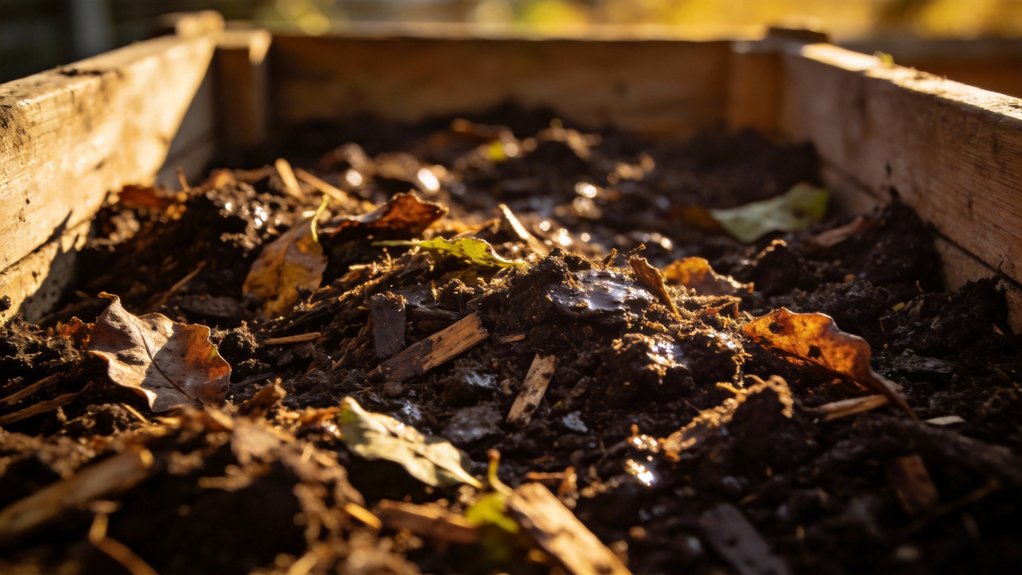
Compost, that dark, crumbly material in gardeners’ hands, transforms kitchen scraps and yard waste into gardening gold.
Compost transforms kitchen scraps and yard waste into gardening gold, one dark, crumbly handful at a time.
You’ll return valuable nutrients to your soil, supporting healthier plant growth while ditching chemical fertilizers.
The benefits of composting extend beyond your garden.
You’re reducing organic waste sent to landfills, which disrupts natural nutrient cycles and generates methane emissions.
Despite composting myths suggesting it’s complicated or smelly, you can start a backyard pile with basic ingredients: nitrogen-rich greens, carbon-rich browns, water, and air.
In just 2-3 months, you’ll have finished compost that boosts soil health, increases microbial activity, and improves water retention.
The Four Essential Ingredients for Backyard Composting Success
The magic of composting hinges on four essential ingredients working together in your pile.
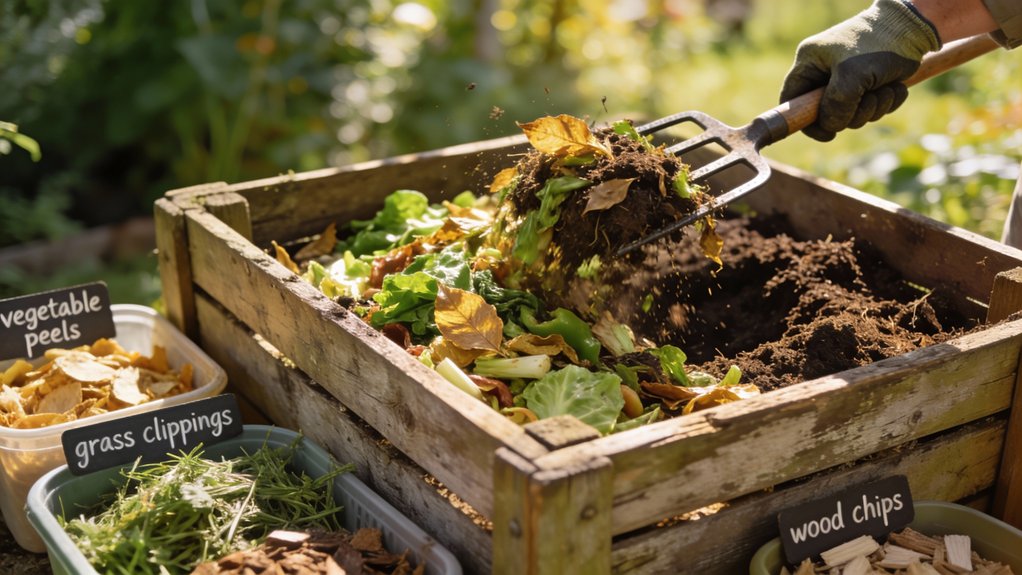
You’ll need nitrogen sources like fruit scraps, coffee grounds, and fresh grass clippings.
Carbon sources include dried leaves, straw, and shredded newspaper.
Here’s what makes your system thrive:
- Mix two parts browns to one part greens for ideal balance
- Maintain moisture levels resembling a wrung-out sponge
- Turn your pile regularly to supply oxygen
Water activates microbial life, while oxygen fuels aerobic decomposition.
Get these elements right, and you’re building a self-sustaining ecosystem.
Your kitchen waste transforms into garden gold through this straightforward chemistry.
Choosing the Right Bin or Container for Your Space
Now that you’ve got the right ingredients, you’ll need a container to hold them. Your bin choice depends on your space and lifestyle.
Urban dwellers benefit from enclosed bins that minimize odors and neighbors’ concerns. If you’ve got room, open piles work great.
Enclosed bins suit urban spaces by controlling odors and keeping neighbors happy, while open piles work best with ample room.
For customization, consider DIY options using bin materials like wood pallets, wire, or cinder blocks. Pre-made bins offer convenience and features like tumblers.
Prioritize a 3x3x3 feet minimum size for heat retention. Most importantly, guarantee adequate airflow through ventilation holes or raised designs.
This supports the aerobic conditions your compost needs.
Materials That Belong in Your Compost Bin
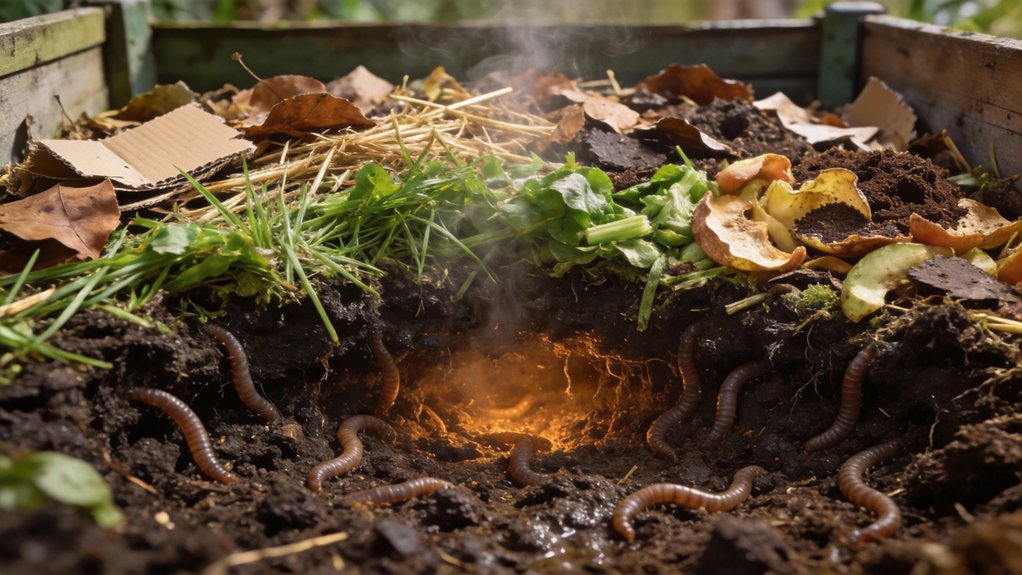
Success with composting comes down to what you put in your bin. You’ll want a two-to-one ratio of browns to greens for ideal decomposition.
Here’s what works best:
- Greens: fruit scraps, vegetable waste, coffee grounds, fresh grass clippings
- Browns: dried leaves, straw, shredded newspaper, cardboard pieces
- Chopped materials: break down larger pieces to accelerate breakdown
Composting benefits your soil noticeably, but composting myths often mislead beginners. Skip meat, dairy, oils, and pet waste: they attract pests and harbor pathogens.
Chop everything into smaller pieces; increased surface area speeds decomposition considerably.
Your finished compost emerges dark brown, crumbly, and odor-free within months, ready to enrich your garden’s health.
Materials to Keep Out of Your Backyard Compost
While you’ve now got the right stuff for your bin, knowing what to exclude matters just as much.
Skip meat, dairy, and oils: they’re pest attraction disasters. Bones and pet waste decompose slowly and harbor harmful pathogens.
Skip meat, dairy, and oils: they attract pests and harbor harmful pathogens while decomposing slowly.
Don’t toss processed foods, wrappers, or plastic; they won’t break down. Synthetic materials like glass and metals disrupt your composting process entirely.
Large quantities of dog or cat manure pose serious health risks.
These exclusions prevent odor management problems, pest infestations, and contamination.
How to Layer and Build Your Compost Pile
Once you’ve gathered your materials, it’s time to build your pile using the “lasagna layering” technique. This method alternates browns and greens for balanced compost pile maintenance.
Start with these foundational steps:
- Begin with 4-6 inches of browns like dried leaves and straw
- Add 2-4 inches of greens such as vegetable scraps and grass clippings
- Continue layering until reaching 3 feet for ideal heat retention
Mix each layer thoroughly to promote airflow and moisture retention.
Chop your materials to increase surface area, which accelerates microbial activity and decomposition.
Cover your pile with a tarp, maintaining moisture like a wrung-out sponge.
These compost layering techniques create an efficient, innovative system.
Keeping Your Pile Moist, Airy, and Warm
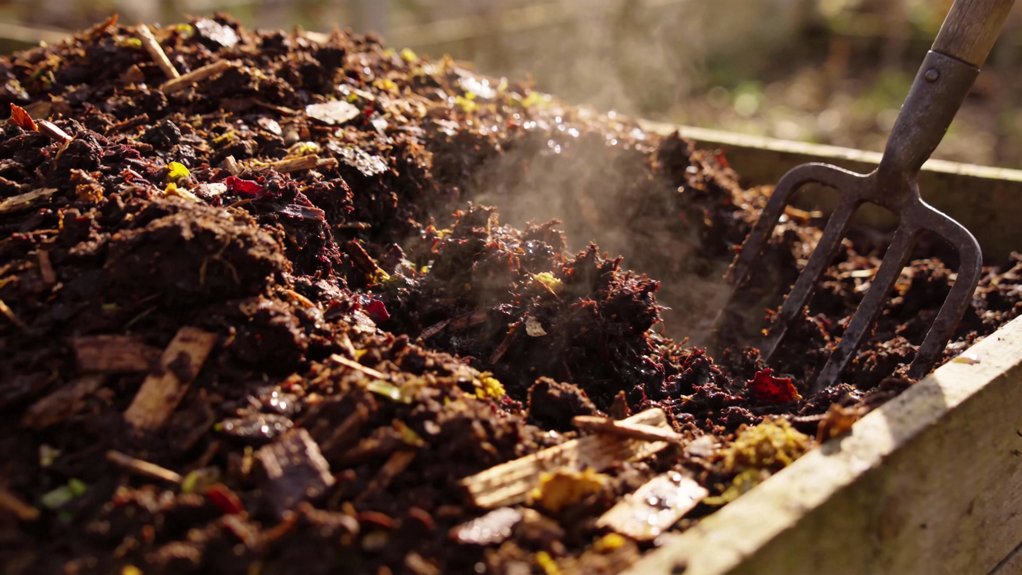
Now that you’ve built your pile with proper layering, keeping it in the right condition is what makes decomposition happen fast.
You’ll want moisture retention at 50-60%, similar to a wrung-out sponge. Water your pile when it feels dry.
For aeration techniques, turn your pile at least yearly to introduce oxygen. This accelerates breakdown considerably.
Build your pile at least 3x3x3 feet to generate and maintain heat through microbial activity. Temperatures should reach 130°F to 160°F, killing pathogens and weed seeds.
Cover your pile with a tarp or straw. This protects against heavy rain and excessive sun drying while preserving ideal conditions.
When and How to Turn Your Compost
Turning your pile is where the real work happens, and it’s the main way you’ll speed up decomposition.
You’re reintroducing oxygen and kickstarting microbial activity when you turn your compost.
Our compost turning techniques work best when:
- Your pile’s internal temperature drops below 130°F
- Materials feel moist like a wrung-out sponge, not soggy
- You’ve waited at least once yearly for basic results
Use a pitchfork or compost turner to mix everything thoroughly.
This even distribution prevents odors from anaerobic conditions.
The compost aeration benefits are substantial; you’ll achieve finished compost in just two to three months during warm weather instead of waiting much longer.
Composting Through Cold Seasons: Winter Tips
While most folks assume composting stops when temperatures drop, your pile can keep breaking down all winter long, it’ll just move slower.
Maintain at least a 3x3x3 feet size to retain heat effectively.
Insulate your compost pile with straw bales or tarps to preserve warmth and moisture, keeping microbial activity going strong.
Add extra carbon-rich materials to balance moisture from winter rains and thaws.
Skip frequent turning during cold weather composting; instead, monitor temperature and moisture levels regularly.
With proper management, your pile yields finished compost by spring, giving you nutrient-rich soil amendment ready when planting begins.
How to Identify Finished Compost (Dark, Crumbly, Earthy-Smelling)
After months of tending your pile, you’ll eventually reach the finish line: finished compost that’s ready to enrich your garden.
You’ve nailed it when you spot these three key indicators:
- Compost color and texture: Dark brown, crumbly material resembling rich garden soil signals complete decomposition.
- Sweet, earthy aroma: A pleasant smell confirms the process has stabilized without unpleasant odors.
- Unrecognizable materials: Original items have broken down completely, except possibly some larger woody pieces.
Your pile will shrink 30-50% during decomposition.
Before using your finished compost, cure it for at least four weeks.
This extra time enhances quality and boosts effectiveness for your plants.