How to Prepare Your Patio for Winter
Like Aesop’s ant preparing for winter, you’ve got work ahead before the cold hits. Your patio won’t survive harsh weather without a solid game plan.
Should you close it down completely, or keep it functional through the season? The answer depends on what you’ve got and how you use it.
Here’s what you need to know first.
Reader-supported: if you buy through links on this page we may earn a small commission, at no extra cost to you.
Decide: Do You Want to Close or Use Your Patio in Winter?
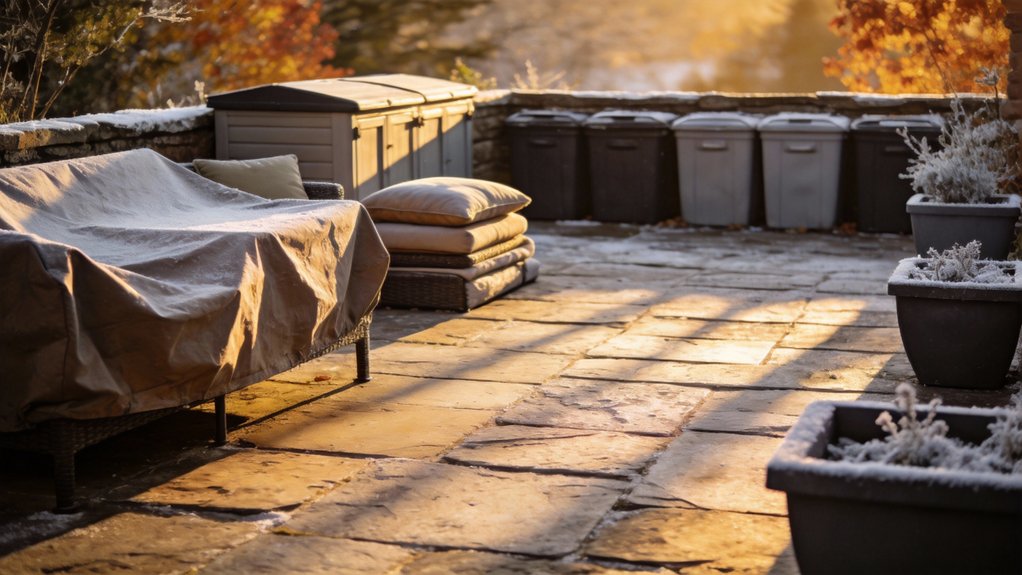
How you prepare your patio really depends on one key question: will you actually use it when temperatures drop?
Your patio usage patterns and local winter climate should guide this decision.
If you’ll venture outside during cold months, you’re looking at installing heaters or fire pits for warmth.
But if you won’t use it, closing it makes sense. However, closing requires serious winterization work.
Either way, you’ve got decisions ahead.
Think honestly about your habits. Does your region get harsh winters? Will you realistically sit outside?
Your answers determine whether you’re protecting an active space or storing one away completely.
When using outdoor heaters, ensure you follow manufacturer’s instructions to keep your patio safe and functional throughout winter.
Clear Away Debris and Declutter
Once you’ve decided whether you’ll use your patio through winter, it’s time to prep the space itself. Start with thorough debris removal: rake away fallen leaves, dead plants, and organic matter that traps moisture and promotes mold. This foundation work prevents winter damage.
Next, tackle clutter management by removing lightweight furniture, decorative pillows, and non-weatherproof items to dry storage. Keep surfaces completely clear so snow and ice management becomes efficient.
Remove lightweight furniture and non-weatherproof items to keep your patio clear for efficient winter snow and ice management.
Check regularly throughout winter for accumulating debris.
Clean patios facilitate proper maintenance and protect your investment from harsh weather conditions.
Clean and Inspect Your Patio Furniture
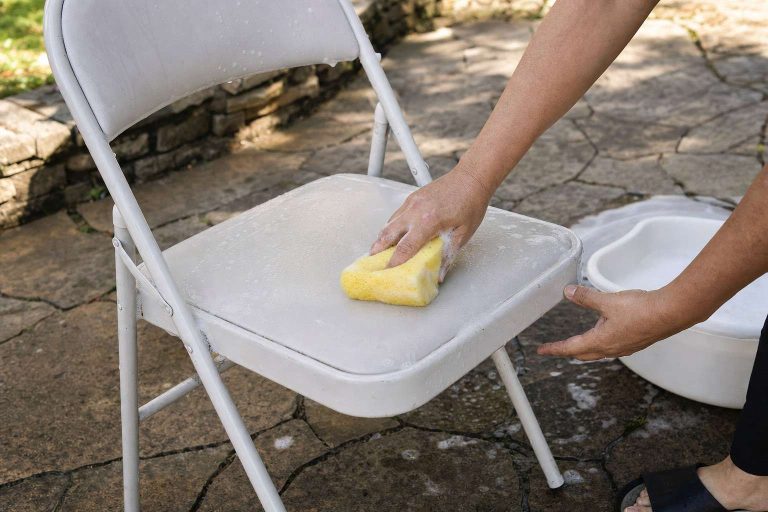
Before storing your furniture away, give it a thorough cleaning to remove dirt, mold spores, and other buildup that’ll cause problems during winter months. Wash all surfaces with mild soap and warm water.
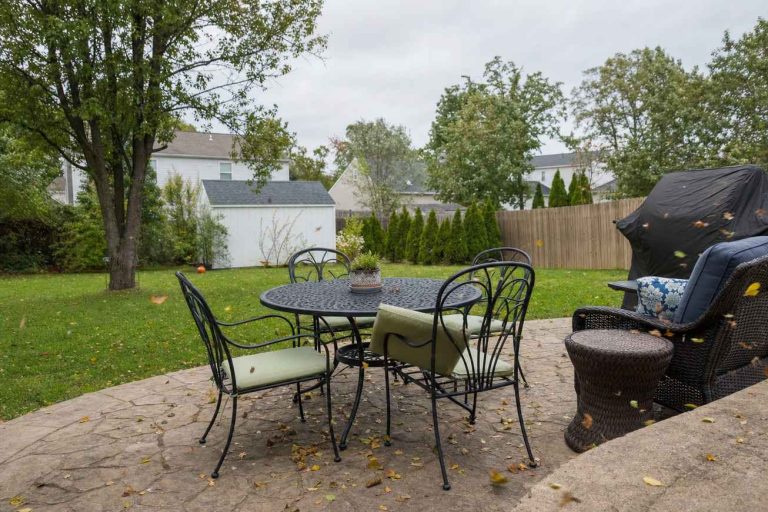
For furniture maintenance, inspect metal pieces carefully for rust spots and treat them immediately with appropriate products. Steel and wrought iron require particular attention as they are highly susceptible to rust and need consistent care to prevent deterioration.
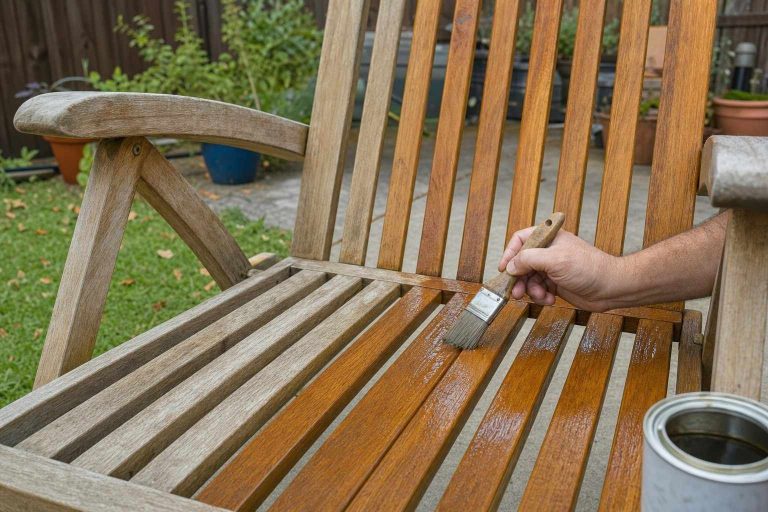
Seal any unsealed wooden furniture with protective coating to prevent moisture damage.
Clean wicker and fabric cushions per manufacturer guidelines, ensuring they’re completely dry. Store cushions indoors or under waterproof covers.
This rust prevention approach and proactive care extend your furniture’s lifespan considerably.
Store Cushions and Lightweight Items Indoors
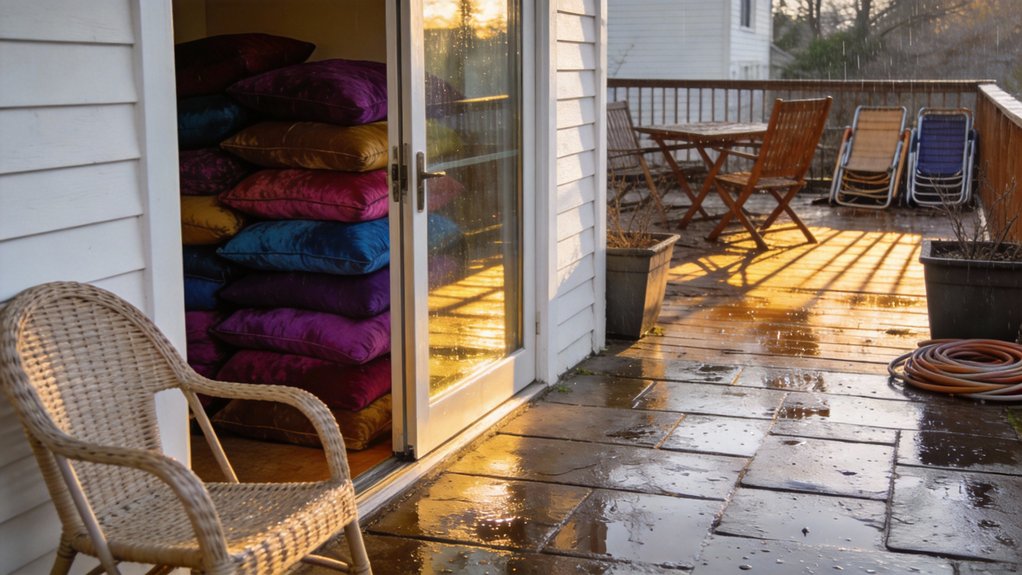
Since moisture and cold temperatures can wreak havoc on cushions and lightweight furniture, moving them indoors is your best defense against mold, mildew, and weather damage.
Store cushions in a dry location away from temperature fluctuations. This cushion maintenance approach extends their lifespan considerably.
If you’re short on space, invest in waterproof storage solutions like bins or bags. They’ll keep your items protected and organized.
Don’t forget lightweight patio furniture; bring those pieces inside too.
Before storing everything, check for existing moisture or damage. Periodically inspect your stored items throughout winter to catch any problems early.
Seal Wood and Check Hardscapes for Cracks
Your wooden deck and patio surfaces need protection before winter arrives. Wood preservation keeps moisture from penetrating the grain and causing rot.
You’ll want to inspect for soft spots or discoloration that signal damage.
For crack assessment, examine hardscapes like concrete and pavers closely:
- Look for hairline fractures that’ll expand when ice forms
- Check joints between stones for separation or debris buildup
- Scan walkways where freeze-thaw cycles cause the most damage
Apply weatherproof sealant to wood surfaces now.
Rinse and reseal pavers and concrete to shield against freezing temperatures.
Regular sweeping removes debris that traps moisture.
Professional sealing services guarantee long-term durability if you want expert results.
Drain Water Features and Shut Off Supply Lines
Water features like fountains and ponds need draining before temperatures drop below freezing.
You’ll want to shut off water supply lines connected to outdoor features first.
Frozen pipes burst under pressure, causing expensive damage you’d rather avoid.
Remove pumps and store them indoors where they’re protected from harsh winter conditions.
Drain all water completely from basins and pipes.
Clean and dry decorative elements like rocks and plants to prevent mold during storage.
This winter preparation keeps your water feature maintenance simple.
Come spring, you’ll appreciate the effort you invested in protecting your investment today.
Protect Built-In Furniture With Secure Covers
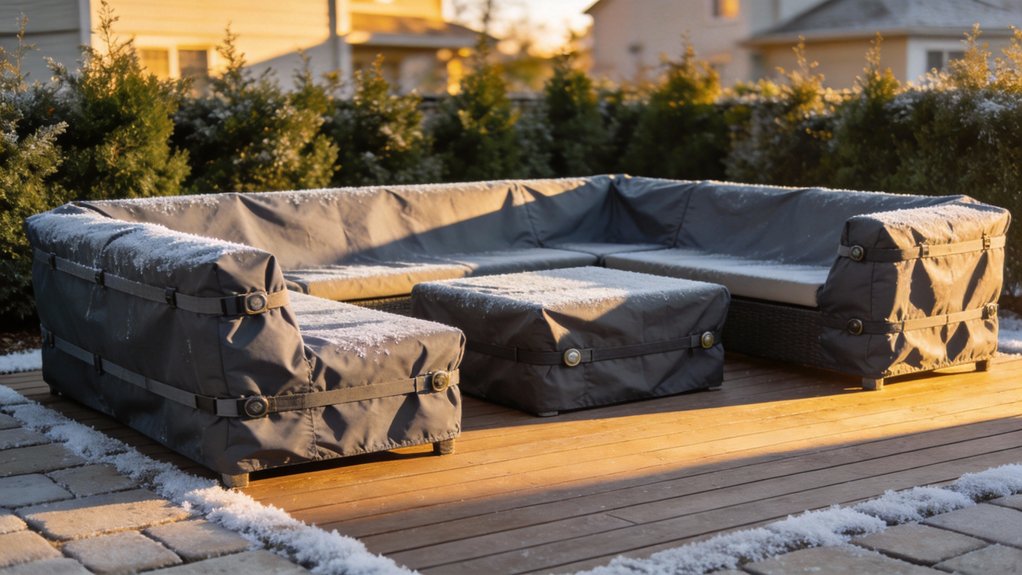
Built-in furniture like benches, tables, and storage boxes need solid protection when winter arrives.
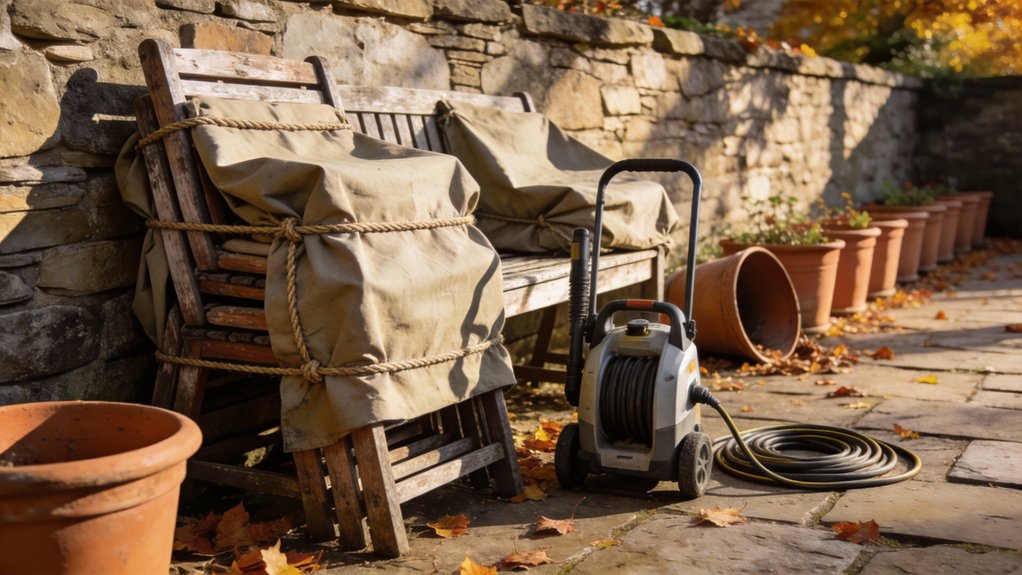
You’ll want to invest in high-quality, weatherproof cover types designed specifically for outdoor furniture.
Secure fasteners (straps, weights, or clips) keep covers snug during harsh winds and temperature swings.
Here’s what you should focus on:
- Select breathable materials that prevent moisture buildup and mold growth underneath
- Inspect covers monthly for tears, wear, or damage requiring replacement
- Use additional weights or straps during severe winter conditions for extra stability
Check your covers regularly throughout the season.
This approach shields your investment and extends furniture lifespan considerably.
Apply Weatherproof Covers to Remaining Surfaces
Once you’ve covered your built-in pieces, turn your attention to everything else on the patio.
You’ll want heavy-duty, waterproof cover materials designed specifically for winter’s harsh conditions.
These shields defend against snow, ice, and moisture damage that can degrade your outdoor investments.
Secure your covers tightly so wind doesn’t displace them.
Check periodically for tears or deterioration; damaged covers expose furniture underneath.
Consider breathable cover materials that prevent moisture buildup while blocking external elements.
This approach extends your furniture’s lifespan considerably.
Inspect covers monthly during winter.
Replace worn ones promptly to maintain consistent protection and preserve your patio’s condition.
Layer Lighting and Heat for Winter Comfort
As the temperature drops, you’ll want to transform your patio into a comfortable gathering space rather than let it sit unused all winter.
Layering lighting and heat creates an inviting environment that extends your outdoor season considerably.
- String lights draped overhead paired with lanterns establish a cozy ambiance while illuminating walkways safely.
- Robust patio heaters provide consistent radiant heat, keeping guests comfortable during evening gatherings.
- Solar lighting offers sustainable illumination that functions reliably through winter months.
Combining these elements strategically transforms your patio.
Position heaters near seating areas for maximum warmth distribution.
Add weatherproof rugs alongside heating sources for underfoot comfort.
This thoughtful approach maximizes usability while maintaining aesthetic appeal throughout the colder months.
Maintain Your Patio Throughout the Season
Winter maintenance keeps your patio functional and prevents costly damage during the cold months.
Clear snow and ice regularly using plastic shovels that won’t harm surfaces or your patio heating equipment. Inspect furniture covers monthly and replace worn ones promptly.
Regular snow removal with plastic shovels and monthly furniture cover inspections protect your patio year-round.
Apply weatherproof sealants on wooden decks before temperatures drop.
Check stone or concrete for cracks that trap moisture. Use pet-safe deicing products to manage ice while protecting plants and surfaces.
Your winter decor stays protected when you conduct seasonal inspections for debris and damage.
These straightforward steps guarantee your outdoor space remains safe and ready throughout winter.